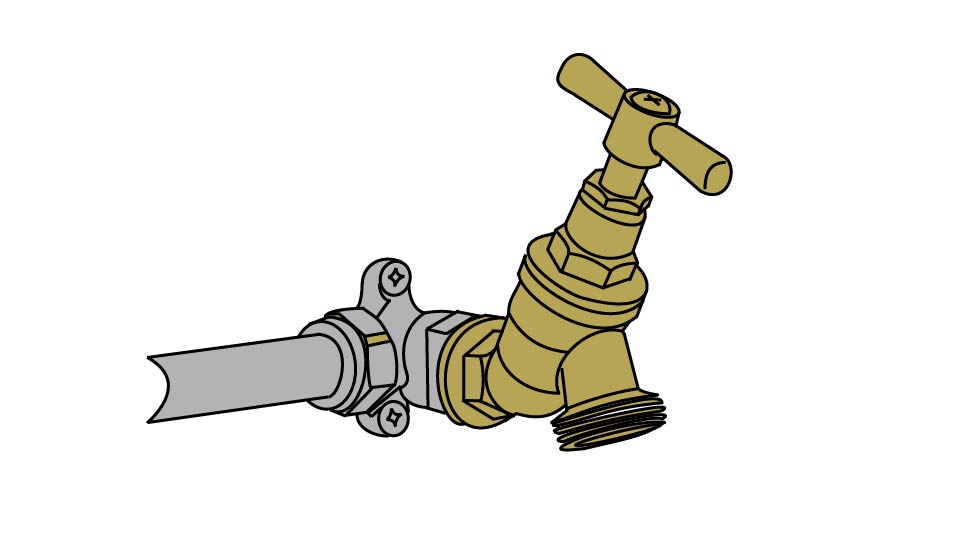
You turn on a faucet and water comes out.
Seems simple. But between the city water main and that faucet is a system of pipes, valves, and pressure that works 24/7 to deliver clean water on demand.
Most homeowners never think about it until something goes wrong.
Here’s the thing: understanding your water supply system is the difference between “oh no, there’s a leak” and “here’s where I shut off the water and how I’ll fix it.”
It’s also the difference between a plumber making $300 for a simple repair and you fixing it yourself in 10 minutes.
Let’s break it down.
Where Water Comes From (And Why Pressure Matters)
Water enters your home through a main supply line, usually buried underground. It’s coming from either:
- City water system – A municipal water main that serves your neighborhood
- Well – Your own private water source (less common in urban/suburban areas)
Here’s the critical part: That water is under pressure. The utility company (or your well pump) is actively pushing it to your house at roughly 50-80 PSI (pounds per square inch).
Pressure is everything. Without it, water wouldn’t flow upstairs, wouldn’t reach the second floor, wouldn’t fill your shower with a decent stream. Pressure does the work.
This is why:
- A leak under pressure sprays (dramatic and scary, but fixable)
- Low water pressure is a real problem (not just annoying, it indicates an issue)
- Your pipes need to be rated for pressure (they’re not just tubes, they’re pressure vessels)
The Water Main (Where Everything Begins)
Your water supply starts at the municipal water main—a large pipe buried under the street that serves multiple houses.
How it connects to you:
The city taps the main and runs a smaller line (your service line) to your property. This line is usually buried 3-4 feet deep to prevent freezing.
What you need to know:
- The service line is your responsibility once it crosses your property line
- If it leaks, you pay for the repair (not the city)
- If it freezes in winter, you lose water (and it’s expensive to thaw)
- Older service lines (pre-1970s) might be made of lead—a serious health hazard
Real talk: If your home is older and you don’t know what your service line is made of, it’s worth having a plumber check. Lead pipes need to be replaced.
The Main Shut-Off Valve (Your Emergency Button)
Where your service line enters your house, there should be a valve. This is the main shut-off valve, and it’s the most important valve in your entire home.
What it does: Turns off all water to your house simultaneously.
Why you need to know where it is:
- Burst pipe? Main shut-off.
- Major leak? Main shut-off.
- Water damage? Main shut-off.
- Going on vacation for weeks? Main shut-off (prevents catastrophic leaks while you’re gone).
Where to find it:
- Usually where the service line enters the house (basement, crawlspace, or outside)
- Sometimes in a small pit or box buried in the yard (near the street)
- Occasionally in a utility room
Pro tip: Find it now, before there’s an emergency. Test it to make sure it works. If it’s stuck or corroded, get a plumber to replace it. A stuck main valve during an emergency is a nightmare.
The Pressure-Reducing Valve (Protecting Your Pipes)
After the main shut-off valve, many homes have a pressure-reducing valve (PRV). This valve does exactly what it sounds like: it reduces the water pressure coming from the main.
Why it’s there:
City water pressure can vary wildly—sometimes 50 PSI, sometimes 100+ PSI. Pipes, fixtures, and appliances are rated for a certain pressure range. Too much pressure can:
- Damage seals and gaskets
- Cause leaks at connections
- Shorten the lifespan of fixtures
- Create banging sounds in pipes (water hammer)
A PRV keeps pressure at a safe, consistent level (usually 50-60 PSI).
How to tell if you have one: Look at your water meter or main shut-off area. A PRV looks like a small, brass bulb-shaped device, usually about the size of a softball.
What to do if pressure is too high: If you notice weak flows, banging pipes, or frequent leaks, the PRV might be failing. A plumber can test pressure and replace it if needed.
Real talk: Most homes have them. Most homeowners don’t know they exist. If you have one, be grateful—it’s quietly protecting your entire system.
The Water Meter (Knowing How Much You Use)
Your water meter measures how much water enters your home. It’s usually located where the service line enters your house, often in a pit near the street or in your basement.
What it looks like: A dial or digital display that tracks water usage in gallons (or cubic feet, depending on your region).
Why it matters:
- Utility company uses it to bill you
- You can check it to detect leaks (more on that below)
- It’s the official record of your water consumption
How to read it: Most meters have a dial face similar to an odometer. Write down the number, check it again in a few days. If it changed without anyone using water, you have a leak.
Pro tip: Check your meter monthly. If you spot a sudden increase with no explanation, you likely have a hidden leak. Finding it early saves money and water.
The Cold Water Line (Direct Route)
Cold water comes directly from the main line and travels to your fixtures through cold water supply pipes.
Where it goes:
- Outdoor spigots
- Toilet fill valves
- Sink cold-water lines
- Washing machine
- Dishwasher
- Refrigerator ice maker
- Shower/tub cold-water line
What it’s made of: Modern homes use PEX, copper, or PVC. Older homes might have galvanized steel (which can rust internally and reduce water quality).
Pipe sizing matters: Main line is usually 3/4″ diameter. Branch lines to individual fixtures are smaller (1/2″ or smaller). Proper sizing ensures adequate flow to all fixtures.
Real talk: If water pressure drops significantly when multiple fixtures are on, you might have undersized pipes or a partially blocked line. A plumber can diagnose this.
The Hot Water Line (A Detour Through the Heater)
Hot water takes a different route. Cold water enters the water heater, gets heated, then travels through separate hot-water pipes to your fixtures.
The journey:
- Cold water enters the water heater
- Heater warms it (gas or electric)
- Hot water leaves the heater
- Travels through insulated hot-water pipes to fixtures
- Returns to the heater (if you have a recirculation system) or waits in the pipe until you turn on a hot tap
Why separate pipes? Hot water expands as it heats. If it traveled through the same pipes as cold water, you’d have mixing and pressure issues. Separate pipes keep hot and cold independent.
Why hot water takes time: That delay when you turn on a hot tap? That’s the heater warming up the water in the pipe between the heater and your fixture. The longer the pipe run, the longer you wait.
Recirculation systems (the fancy option): Some homes have a pump that keeps hot water circulating through the pipes. This means instant hot water at every tap. Costs more to install, saves water (you’re not running the tap waiting for hot water).
Shut-Off Valves (Individual Control)
Beyond the main shut-off, most fixtures have their own shut-off valve. These are small, usually found under sinks or behind toilets.
What they do: Let you shut off water to one fixture without affecting the rest of the house.
Why they matter:
- Fixing a leaky faucet? Turn off that sink’s valve.
- Replacing a toilet? Turn off the toilet’s valve.
- Much better than shutting off the entire house.
Types:
Ball valve – Lever handle, quarter-turn on/off. Modern standard. Most reliable.
Gate valve – Wheel handle, multiple turns to open/close. Older style. Can stick and fail.
Compression valve – Screw-down handle. Very old. Prone to leaking.
Where they should be:
- Under every sink (hot and cold)
- Behind/near every toilet
- At the water heater inlet
- Anywhere a fixture connects to the supply line
Pro tip: If a fixture doesn’t have a shut-off valve, install one. Costs $20 and prevents disasters.
Water Pressure: Too Much, Too Little, Just Right
Low pressure (under 30 PSI):
- Weak shower stream
- Slow toilet fill
- Washing machine takes forever
- Causes: leak, blocked line, failing PRV, or municipal water issue
High pressure (over 80 PSI):
- Loud banging in pipes (water hammer)
- Leaks at connections
- Fixtures wear out faster
- Causes: faulty PRV, or your system just has naturally high pressure
Just right (50-60 PSI):
- Good shower flow
- Fixtures last longer
- No stress on seals and gaskets
- Peaceful, quiet system
How to check your pressure: Buy an inexpensive pressure gauge ($15-20) that screws onto an outdoor faucet. Attach it and note the reading. If it’s consistently outside 50-80 PSI, you have a pressure issue worth addressing.
Common Water Supply Problems (And What They Mean)
No water at all: Check the main shut-off valve—is it accidentally closed? If not, call the utility company (city issue) or a plumber (your side issue).
Low pressure everywhere: Could be a leak, a blocked line, PRV failure, or municipal issue. A plumber can diagnose.
Low pressure at one fixture: Usually a clogged aerator (the strainer at the faucet tip). Unscrew it, clean it, done.
Water hammering (banging sounds): PRV failing, or sudden pressure spikes. Call a plumber—this can damage pipes.
Leak at a connection: Usually a bad washer or seal. Shut off that fixture’s valve and tighten the fitting. If it still leaks, replace the washer.
Discolored water: Could be rust (if you have old pipes), sediment, or mineral buildup. Run the water for a few minutes. If it clears, it was sediment. If it persists, call a plumber.
Maintenance (Keeping It All Running)
Know where your main shut-off is. Seriously. Find it, test it, know it. Find it now – go ahead, we’ll wait.
Test shut-off valves yearly. Make sure individual fixture valves still work. A stuck valve in an emergency is a nightmare.
Check your meter monthly. You’ll spot leaks early if you do.
Listen for water hammer. Banging pipes = pressure issue. Get it checked.
Inspect visible pipes. Look for moisture, corrosion, or rust stains. Early detection prevents disasters.
Insulate exposed pipes in cold climates. Frozen pipes burst. Insulation prevents it.
Don’t ignore a slow leak. It compounds. A drip today is a flooded basement tomorrow.
The Bottom Line
Your water supply system is simple in concept but critical in execution. It’s pressure and pipes working together to deliver clean water on demand.
Understand the components, know where your shut-offs are, and listen for problems. Do that, and you’ll catch issues early and handle simple fixes yourself.
Everything else? That’s what plumbers are for. And you’ll know exactly what to tell them when you call.
Related Guides You Might Find Helpful
- How Your Home’s Plumbing System Actually Works: From Street to Sink to Sewer – The cornerstone: understanding all three plumbing systems
- How to Choose the Right Fastener – When you’re securing pipes or fixtures
- The DIYer’s Toolbox: A Beginner’s Guide to Essential Tools – Tools you’ll need for plumbing work
- How to Work with Drywall: A Beginner’s Guide – When you need to route or access water lines
Amazon Affiliate Recommendations
Testing & Monitoring
Water Pressure Gauge – Screw it onto an outdoor faucet to check your water pressure. Cheap ($15-20) and incredibly useful for diagnosis.
Water Meter Reader Tool – Helps you read your meter accurately to track usage and detect leaks early.
Valves & Repairs
Ball Valve Shut-Off Kits – Individual fixture shut-off valves for under sinks and toilets. Modern, reliable, essential.
Pressure-Reducing Valve Replacement – If your PRV is failing and needs replacement. Mid-level DIY job.
Pipes & Connections
PEX Tubing & Fittings – Modern water supply piping. Flexible, reliable, easier to install than copper. Find these at your local home improvement store.
Pipe Insulation Wrap – Prevents freezing in cold climates and reduces heat loss on hot water lines.
Tools & Supplies
Adjustable Wrench Set – Essential for tightening or loosening water line connections.
Pipe Tape & Plumber’s Putty – Sealing threads and connections. These are your friends.
Bucket & Shop Towels – Always have these ready. Water work gets wet.
As an Amazon Associate, I earn from qualifying purchases. Click through the links above to support Skippity Whistles.
Water supply work can cause property damage if done incorrectly. Always know where your main shut-off valve is. When in doubt, call a licensed plumber.
3020
©2026 SkippityWhistles.com All rights reserved
