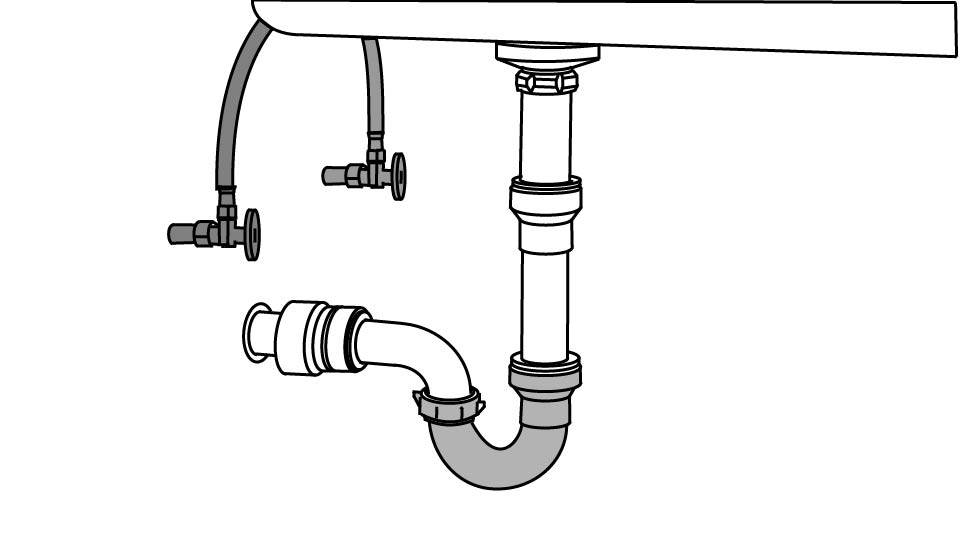
You’re standing under your sink looking at the pipes.
There’s a curved pipe that holds water. You’ve looked at it a thousand times and never thought about it. It’s just there. Doing its job curved-pipe thing. Quietly.
“It’s a trap!”
That curved pipe is a trap. Specifically, it’s probably a P-trap. And that simple bend of pipe is doing something critical: it’s keeping the smell of your sewer out of your house.
That bend isn’t decorative. It’s not there because the plumber felt like adding a curve. It’s there because without it, your house would smell like a port-a-potty. Literally. Sewer gas would flow up through the drain and into your home.
If it goes dry, sewer gas seeps in. Suddenly your house smells like a port-a-potty and you can’t figure out why…
There you are, sleeping in your nice cozy bed, while noxious gases seep in and around you, tainting the nice nitrogen/oxygen your normally snore through with methane, hydrogen sulfide, ammonia. It won’t kill you, but it’s guaranteed to make you unhappy.
Understanding how traps work, why they matter, and what happens when they fail means understanding why your plumber keeps talking about this seemingly insignificant bend of pipe.
Let’s demystify it.
The Core Principle: A Trap Is A Water-Filled Bend That Creates A Barrier Between Your House And The Sewer
This is the mindset shift that separates people who understand plumbing from people who just think drains are magic holes.
Every drain in your house—sink, toilet, shower, laundry—has a trap. That trap holds water. That water creates a seal. That seal blocks sewer gas and rodents from coming back up the pipe into your house.
That’s it. The trap is simple. The principle is simple. The protection is critical.
Understanding this means understanding why a dry trap is a problem, why you can’t just remove a trap to make drains faster, and why every fixture needs one.
What A Trap Actually Does
A trap is a U-shaped or S-shaped bend in the drainage pipe.
How it works:
- Water drains down from your sink
- Water fills the bend (the trap)
- The bend creates a water seal
- That seal blocks sewer gas and odors from coming back up
Under normal conditions: Water sits in the trap, creating the seal. Sewer gas is blocked. You don’t smell anything.
What actually happens: You wash your hands, brush your teeth… run the water. That water flows down the drain and shoves the trap water down the line. Now the trap is filled with fresh water from the sink. Every time you use the sink, you replace the water in the trap. Very clever.
Real talk: A trap is a simple but critical piece of plumbing. When it works, you don’t notice it. When it fails, you notice immediately.
P-Traps vs. S-Traps (What’s The Difference?)
P-Trap (The Modern Standard)
This is what you see under most modern sinks.
What it looks like: A bend that looks like the letter “P” when viewed from the side. One vertical section, one horizontal section.
Where it’s used: Under sinks, in kitchens, in bathrooms.
Why it’s better: The horizontal section (the “cleanout” point) makes it easier to clear clogs. You can unscrew the bottom and clear debris without replacing the whole trap.
Real talk: This is the standard for modern plumbing code. If you see a sink without a P-trap, it’s old or improperly installed.
S-Trap (The Older One)
This is what you see in older homes.
What it looks like: A bend that looks like the letter “S” when viewed from the side. Two curves, both vertical.
Where it was used: Older homes, pre-1960s construction.
Why it’s problematic: The shape creates a siphon effect. When water drains fast, it can siphon out the water seal, leaving the trap dry. Sewer gas leaks back in.
Real talk: If you have an S-trap, consider replacing it with a P-trap. Modern plumbing code actually prohibits new S-trap installations because they’re unreliable.
How A Trap Creates A Seal (The Physics Part)
Step 1: Water Enters The Trap
Water drains from your sink down the pipe toward the trap.
Step 2: The Trap Fills
Water enters the U-shaped or S-shaped bend and shove the old water out. Most of the new water drains away, but just enough is left to refill the trap.
Step 3: The Seal Forms
Once the trap is filled, the water creates a barrier. Sewer gas can’t pass through water. The gas is blocked.
Step 4: The Seal Holds
As long as there’s water in the trap, the seal holds. Sewer gas stays in the sewer.
Real talk: This is why dry traps are problems. No water = no seal = sewer gas enters your house.
Why Traps Dry Out (And Why That’s Bad)
Reason 1: The Fixture Isn’t Used For A Long Time
If you have a guest bathroom that nobody uses, the trap will eventually evaporate.
What happens: No water in the trap. Sewer gas leaks into the house. The bathroom smells terrible.
Solution: Run water down the drain occasionally to refill the trap. Even once a month keeps the seal fresh.
Reason 2: An S-Trap Siphons During Heavy Drainage
If you have an S-trap and you drain a large volume of water quickly, the siphon effect can suck the water out of the trap.
What happens: The trap dries. Sewer gas leaks in. The smell returns.
Solution: Replace the S-trap with a P-trap. Modern code requires it.
Reason 3: The Fixture Leaks And The Trap Never Fills
A slow leak under the sink means the trap never gets enough water to create a proper seal.
What happens: The seal is weak or absent. Sewer gas leaks in.
Solution: Fix the leak. Repair the trap if needed.
Common Trap Problems (Learn From These)
❌ Removing a trap to “speed up drainage” The trap isn’t slowing drainage (much). It’s protecting you from sewer gas. Removing it means sewer smell in your house. Don’t do this.
❌ Installing a sink without a trap Some DIYers skip the trap thinking it’s unnecessary. Wrong. Every sink needs a trap. Code requires it. Health requires it.
❌ Ignoring an S-trap in an older home S-traps are unreliable. If you have one, replace it with a P-trap.
❌ Not running water in unused fixtures A guest bathroom that nobody uses develops a dry trap. Eventually the smell happens. Use it or run water monthly.
❌Not running water to clear non-water substances You pour something down the sink, or someone is sink in it, and doesn’t flush it out with water. That substance shoves the water out of the trap, but settles in it instead. As it’s not water, it will dry there, stinking on its own, and will release the fumes rising up from the sewer. Always rinse the sink out.
❌ Trying to clear a clogged trap with harsh chemicals Some chemicals damage trap material. Use a plunger or mechanical snake first. Chemicals are last resort.
❌ Not knowing where your cleanout is The bottom of a P-trap unscrews, so that you can clean it out. Surprisingly, it’s called the cleanout. If you know where it is, you can clear clogs easily. If you don’t, you’re stuck.
Real talk: These mistakes cause sewer smell or code violations.
Pro Tips (The Shortcuts That Actually Work)
Know where your cleanouts are. Most P-traps have a cleanout at the bottom (a nut you can unscrew by hand). Mark them or take photos so you know where they are when you need them.
Run water in unused sinks monthly. Even a minute of water keeps the trap seal fresh. Prevents sewer smell when you eventually use the fixture.
If you smell sewer in a bathroom, it’s probably a dry trap. Run water in the fixture. Usually fixes it immediately.
Check under sinks regularly for leaks. A slow leak means the trap may not be filling properly. Fix it before the smell problem starts.
If you have an S-trap, plan to replace it. Modern code and modern reliability both favor P-traps. It’s a worthwhile upgrade.
Call a plumber if you’re unsure. Trap work is basic plumbing. A plumber can verify your traps are working properly.
The Bottom Line
A trap is a water-filled bend that blocks sewer gas from entering your house. P-traps are modern and reliable. S-traps are older and prone to problems.
Key principles:
- Every drain needs a trap
- The trap holds water to create a seal
- The seal blocks sewer gas
- A dry trap allows sewer smell into your house
- P-traps are the modern standard
- S-traps are unreliable and should be replaced
- Unused fixtures need occasional water to keep traps fresh
- The cleanout on a P-trap lets you clear clogs easily
That simple bend of pipe under your sink is doing critical work 24/7. It’s keeping your house from smelling like a sewer.
Respect it. Maintain it. When something goes wrong, fix it.
Your nose will thank you.
Related Guides You Might Find Helpful
- How Your Home’s Plumbing System Actually Works: From Street to Sink to Sewer – Understanding the whole system
- Understanding Drainage: How Gravity and Slope Make Water Flow Downhill – Why slope matters for drain function
- Water Supply 101: From Main to Tap, How Your Water Gets To You – The supply side (contrast with drainage)
- Seals, Gaskets, and Tapes: The Invisible Workers That Stop Leaks – Other sealing systems in plumbing
Amazon Affiliate Recommendations
Trap Components & Replacement
P-Trap Kit (Complete, 1.5-Inch Standard Size) – If you need to replace an S-trap or damaged P-trap. Includes all pieces.
Universal P-Trap Kit (Adjustable to Fit Different Configurations) – For non-standard setups. Flexible and adjustable.
Maintenance & Cleaning
Plunger (Force Cup, For Drains) – Clear trap clogs without chemicals. Works great if you know where the trap is.
Drain Snake (Manual, 25 Feet) – For more stubborn clogs. Feed it down the drain to break up clogs.
Drain Cleaner (Enzymatic, Safe, Non-Caustic) – Gentle on pipes, breaks down organic clogs. Better than harsh chemicals.
As an Amazon Associate, I earn from purchasing links. Click through the links above to support Skippity Whistles.
Trap work involves water and potentially sewer exposure. Always turn off water and drain the system before working on traps. Wash your hands thoroughly after any trap work. If you smell sewer gas persistently, have a professional evaluate your plumbing. Improper trap installation creates health hazards. When in doubt, call a licensed plumber.
3022
©2026 SkippityWhistles.com All rights reserved
