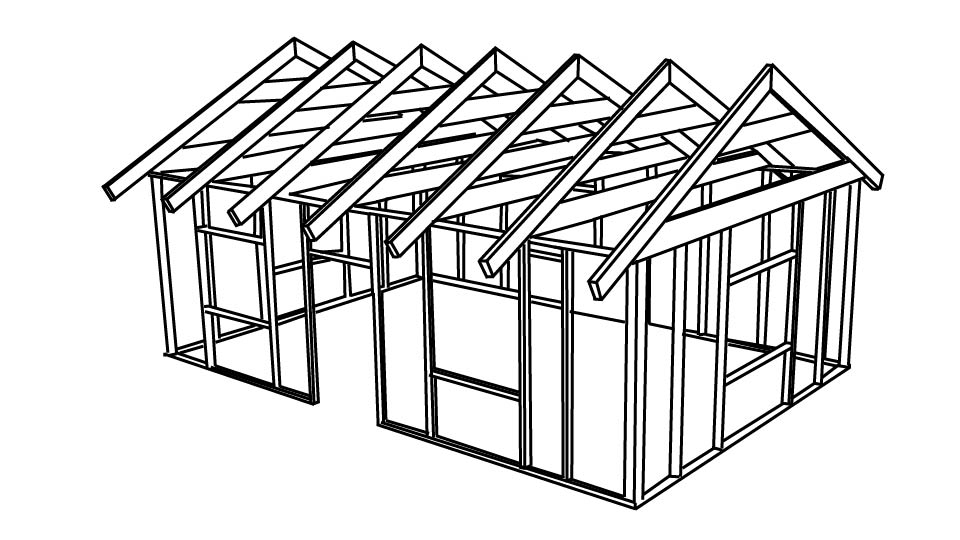
Wood shows up everywhere in DIY projects—doors, shelves, trim, furniture, framing, repairs.
It’s been the go-to construction material for over a thousand years. For good reason. It’s easy to work with, forgiving, and honest. You can see what you’re doing.
But here’s what nobody tells beginners: wood has opinions about how you treat it.
You can rush wood. You can force it. You can ignore its nature. And it’ll often let you get away with it—until it doesn’t. Then your door rubs, your shelf sags, or your frame warps.
This guide isn’t about becoming a woodworker. It’s about understanding wood well enough to work with it instead of against it. So things fit, stay put, and don’t come back to haunt you later.
Why Wood Deserves Respect (But Not Fear)
Wood is popular in DIY for obvious reasons:
✓ Easy to cut ✓ Easy to drill ✓ Easy to fasten ✓ Forgiving of small mistakes
But wood also:
✗ Splits if rushed ✗ Warps if constrained ✗ Swells and shrinks with humidity ✗ Has grain direction that matters
The honest truth: Working with wood correctly usually takes just one or two extra steps. Maybe 15 extra seconds. That’s it.
The temptation is always to do it “good enough.” Often that works. But when it doesn’t, you’re starting over.
Do it right once. Do it correctly. Move on.
Understanding Wood (The Basics You Actually Need)
You don’t need species charts or moisture meters. You need to know three things: what type of wood you’re using, how it behaves, and when it matters.
Solid Wood (Real Wood From Trees)
Pine, oak, maple, cedar—wood cut directly from trees.
Characteristics:
- Strong along the grain (lengthwise)
- Weak across the grain (sideways)
- Moves with humidity (shrinks and expands seasonally)
- Beautiful, but unpredictable
Common uses:
- Shelves
- Doors
- Framing
- Trim and molding
What you need to know: Solid wood is gorgeous but moody. It moves. It can warp. It has grain direction that matters. Plan accordingly.
Engineered Wood (The Stable Option)
Wood products made from layers, fibers, or strands—designed to reduce wood’s bad habits.
Plywood
- Thin sheets of wood glued together
- Strong and stable
- Resists warping
- Perfect for large panels or backing
MDF (Medium-Density Fiberboard)
- Wood fibers glued and pressed together
- Flat, smooth, paints beautifully
- Weak at edges and where fasteners go (edges tear out easily)
- Common in assemble-it-yourself furniture
- Hates water
OSB (Oriented Strand Board)
- Long wood strands bonded with resin
- Strong and affordable
- Rough and utilitarian (doesn’t care about looks)
- Good for backing and rough structures
What you need to know: Engineered wood is stable and predictable. It won’t warp on you. But it has limitations—weak edges, moisture sensitivity, less forgiving of mistakes.
Real talk: For most DIY projects, engineered wood is the better choice. It’s honest about what it is and doesn’t surprise you.
Measuring and Marking (Where “Good Enough” Stops Working)
Most wood problems start before the first cut.
It’s tempting to mark “about there” or hold one board against another and eyeball the cut line. That’s where mistakes happen.
Here’s the discipline:
Measure carefully. “About there” will come back to haunt you when corners don’t meet or one piece is a smidge longer than the other. Take a second. Get it right.
Mark clearly. A thick smudge is like bad GPS—gets you to the neighborhood, but your actual location is anybody’s guess. Use a thin, dark pencil or marker.
Use a square when it matters. Even when pieces are clamped, use that square to confirm. A board that’s 1/8″ off can’t “fix itself” later.
Write it down if you’re unsure. Measure twice, cut once. Write down the measurement if you’re working on a multi-piece project. Don’t trust your memory.
Pro tip: The extra 15 seconds of measuring prevents 30 minutes of frustration later.
Cutting Wood Cleanly (Choose the Right Tool)
You don’t need a shop full of saws. You need the right saw for the cut you’re making.
Handsaw
- Quiet, controlled, slow
- Best for: Precision cuts where you can see what you’re doing
- Requires: Proper support and a steady hand
- Real talk: Slower, but often cleaner for careful work
Circular Saw
- Fast, versatile, powerful
- Best for: Straight cuts through lumber or sheets
- Requires: Good guidance (straight edge or saw guide)
- Real talk: Fast and accurate with practice
Miter Saw
- Precise straight and angle cuts
- Best for: Clean crosscuts and angles
- Requires: A stable base and proper technique
- Real talk: The gold standard for repeat accurate cuts
Jigsaw
- Curved and irregular cuts
- Best for: Cutting shapes, notches, curves
- Requires: Steady hand and practice
- Real talk: Slower, but incredibly versatile
The rule: Choose based on the cut you need, not your preference. A miter saw makes angle cuts easy. A circular saw handles long straight cuts fast. A handsaw gives you control.
Critical: Always fully support the wood before cutting. Unsupported wood splinters, binds blades, and produces ugly cuts that sanding can’t fix.
Drilling and Fastening Into Wood (The Steps That Matter)
Wood accepts fasteners well—but it has limits. Respect those limits and you’re golden.
Pilot Holes (The Game-Changer)
A pilot hole is a small hole you drill where a screw will go. The bit is smaller than the screw—you want the screw to grip.
Why they matter:
✓ Prevent splitting (especially near edges or ends) ✓ Make screws easier to drive ✓ Reduce stripped screws ✓ Take maybe 30 seconds per hole
When they’re essential:
- Screw goes in near the edge of a board
- Screw goes in near the end of a board
- You’re using thick or long screws
- Working with hardwood or dense material
The honest rule: If you’re ever unsure whether you need a pilot hole, the answer is YES. It takes 30 seconds. Splitting the board takes an hour.
Pro tip: For multiple holes of the same size, mark all your spots, then drill all the pilot holes. Then drive all the screws. Assembly line approach = faster and more consistent.
Screws vs. Nails
Screws
- Stronger and cleaner
- Removable (matters if you need to adjust)
- Require pilot holes (but worth it)
- Perfect for: Anything structural or adjustable
Nails
- Faster, no pilot holes needed
- Permanent (good or bad depending on situation)
- Flexible with installation
- Perfect for: Quick fixes, trim, places you won’t adjust later
The decision: If something might need adjustment later, screws are the right answer. If it’s one-time permanent, nails work fine.
Real talk: For most DIY work, screws are better. You have more control and you can always remove them.
Grain Direction (The Quiet Rule Nobody Mentions)
Wood fibers run lengthwise. You see them as long, straight lines in the grain.
The rule:
- Screws driven with the grain hold better
- Screws driven across the grain split more easily
What this means: If a fastener is close to the end of a board, assume a pilot hole is required—even if you didn’t need one last time.
Pro tip: Look at the grain before you screw. It only takes a second and can save your project.
A Note About Knots (The Hidden Problem)
You’ll often see knots in construction-grade lumber. They’re branches from the tree the board came from.
The problem: Grain inside the knot runs at a different angle. This matters.
Why knots cause trouble:
- Harder and denser than surrounding wood (dulls blades)
- Resist screws and split unpredictably
- Loose knots can shrink or fall out over time
The solution: When selecting a board for cutting or shaping, avoid knots when possible. Straight, consistent grain makes everything easier, cleaner, and more predictable.
Real talk: A board with knots isn’t ruined. Just avoid putting fasteners directly into them.
Wood Moves (Even When You Don’t Want It To)
Natural wood swells and shrinks with humidity changes. This isn’t a flaw. It’s just wood being wood.
What happens in practice:
- Doors rub seasonally (wider in summer, tighter in winter)
- Wide boards warp in the middle
- Over-tightened fasteners can cause cracks
- Shelves sag if wood moves
This isn’t your poor craftsmanship. It’s the nature of the material.
Instead of fighting the wood, work with it:
✓ Don’t force tight fits (leave a tiny gap) ✓ Avoid unnecessary glue on joints that might need to move ✓ Don’t over-tighten screws (snug is enough) ✓ Account for movement on wide boards
Pro tip: On wide shelves, use fasteners that allow slight movement rather than locking everything rigid.
Specialty Tools (Occasional Use, Not a Career Change)
You don’t need woodworking tools as a lifestyle. But sometimes a specific problem calls for a specific solution.
Example: A Door That Rubs
- Sanding might be too slow and inconsistent
- Trimming might be too aggressive
- A hand plane or power planer removes small amounts cleanly and keeps edges straight
That doesn’t make you a woodworker. It makes you someone who fixed the problem properly.
Other occasional-use tools:
- Chisels – For hinge cleanup or fitting hardware
- Clamps – For holding pieces while fastening or gluing
- Belt sander – For removing old finish or smoothing large surfaces
- Orbital sander – For finishing work
The philosophy: Buy tools when you need them for a specific job. Not before.
Finishing Wood (Protection, Not Perfection)
Finishes exist to protect wood, not impress judges. Keep it simple.
Paint
- Seals and protects completely
- Hides grain and imperfections
- Perfect for: Trim, doors, furniture that doesn’t show wood
Stain
- Adds color while showing grain
- Requires clear topcoat for protection
- Perfect for: Showing off nice wood grain
Clear Sealers
- Protect from moisture without changing color
- Keep wood looking natural
- Perfect for: Wood you want to show as-is
The finishing rule: Sand just enough to remove splinters and sharp edges. Over-sanding weakens edges and wastes time. Your finish doesn’t need to be magazine-worthy. It needs to protect the wood.
Common Shortcuts That Fail Later (Avoid These)
❌ Skipping pilot holes “I’ll just drive the screw.” Then it splits. Now you’re replacing a board.
❌ Using drywall screws in wood Drywall screws are brittle. They break. Use wood screws.
❌ Forcing tight fits “It’ll go together.” Force too hard and you crack the wood.
❌ Ignoring wood movement Building a shelf? Don’t glue it rigid. Let it move.
❌ Cutting without proper support Unsupported wood binds the blade and splinters.
❌ Over-tightening fasteners Snug is enough. Cranking too hard cracks wood or strips threads.
Real talk: None of these fail immediately. That’s why they’re tempting. They fail later, when you’re not expecting it.
Safety (Because Splinters Suck)
It’s just wood, right? Tell that to the splinter under your eyelid.
Basic safety:
✓ Wear work gloves when handling wood ✓ Wear eye protection when cutting ✓ Keep hands clear of blade paths ✓ Support the wood properly so it doesn’t jump ✓ Use a dust mask when sanding
Pro tip: Two seconds of safety gear prevents weeks of discomfort.
The Bottom Line
Working with wood isn’t about becoming a craftsman. It’s about understanding the material well enough to avoid shortcuts that create future problems.
Take the extra minute. Drill the pilot hole. Let the wood move. Use the right fastener.
Do it once. Do it correctly. Move on with your life.
Related Guides You Might Find Helpful
- The DIYer’s Toolbox: A Beginner’s Guide to the Tools Every DIYer Needs – Tools you’ll need for woodworking
- How to Choose the Right Fastener – Screws, nails, and bolts explained
- How to Choose the Right Drill Bit: The Quick Decision Guide for Right Now – Choosing bits for wood
- A Beginner’s Guide to Working with Drywall: DIY Basics Made Simple – When you’re not working with wood
DIY projects involve risk. Always follow manufacturer instructions and use appropriate safety precautions. Wear eye protection when cutting, and work gloves when handling wood.
Meta Description for WordPress Excerpt
“”
SEO Tags & Keywords
2004
