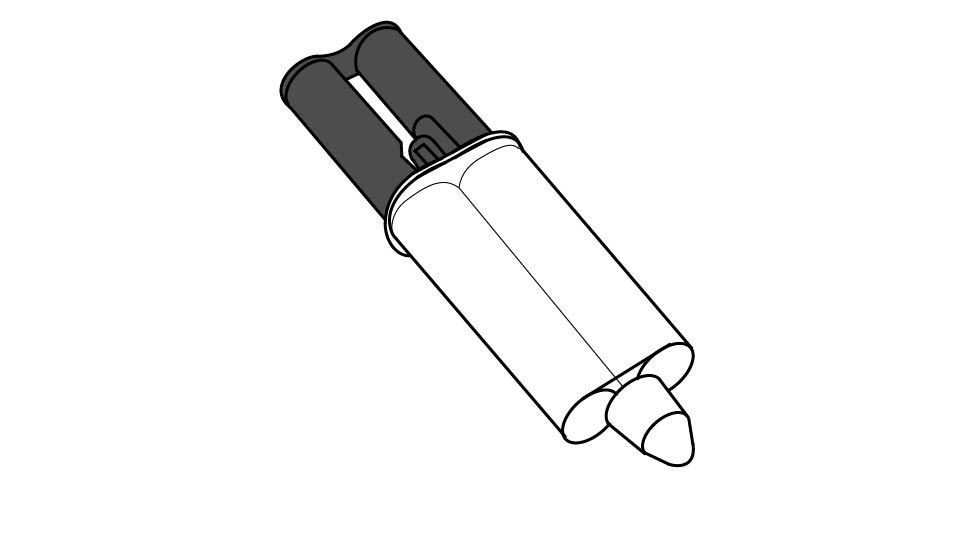
You’re standing in your workshop with a broken ceramic mug and a tube of 2-part epoxy.
You think: “This will take five minutes.”
Two hours later, you’re standing there with your left hand glued to your mixing plate, which is glued to the newspaper, which is glued to the table. Your stir-stick is glued to your right hand. Your jeans have a epoxy spot that will never come out. And you’re wondering: “How did I get here?”
Most people don’t understand that 2-part epoxy is not just adhesive. It’s a permanent relationship with whatever it touches. Once it decides it likes something, that something is staying. Forever. Even if that something is your fingers.
Understanding how 2-part epoxy actually works, how to use it without becoming a permanent installation yourself, and how to clean it up before it decides you’re part of the project means the difference between a successful repair and spending three hours soaking your hands in acetone while your spouse laughs.
Let’s learn how to use epoxy without letting it use you.
The Core Principle: 2-Part Epoxy Creates A Permanent Bond With ANYTHING, Including You—Your Job Is To Keep It Away From Yourself
This is the mindset shift that separates people who use epoxy successfully from people who are now part of their work surface.
2-part epoxy is magic, but it’s the kind of magic that doesn’t differentiate between “the broken thing I want to fix” and “my actual skin.” To epoxy, it’s all the same. Glue-able surfaces.
Once mixed, epoxy has a mission: Find the most important thing in the room and bond with it permanently.
Understanding this means understanding that epoxy is not forgiving. You get one shot to use it correctly before it hardens and you spend the rest of the day picking it off whatever it decided to love.
What 2-Part Epoxy Actually Does
2-part epoxy is comprised of two chemical components that, when mixed, create a chemical reaction that hardens into a permanent bond.
Part A: The resin Part B: The hardener
When you mix them: The hardener reacts with the resin and creates a cross-linked polymer that hardens into plastic.
The result: A permanent bond stronger than the materials you’re bonding. If you epoxied two pieces of wood together, the wood would break before the epoxy bond would.
The catch: Once you mix them, you’ve got a countdown timer. The epoxy is curing. It’s getting harder with each passing second. And it will bond with whatever touches it in the meantime.
The Two-Part System (What You’re Actually Mixing)
Part A: The Resin
This is the base component. It’s the adhesive.
What it is: Liquid plastic precursor (not yet a plastic, but will be).
What it does: Sits there waiting to meet Part B.
Real talk: Part A alone is useless. It’s just sticky liquid. It needs Part B to become the magic.
Part B: The Hardener
This is the activator. It’s what starts the party.
What it is: A chemical catalyst that reacts with the resin.
What it does: When mixed with Part A, it triggers a chemical reaction that turns the liquid into solid plastic.
Real talk: Part B is the key. Without it, Part A stays liquid forever. With it, you’ve got a countdown timer.
The Working Time (Your Window of Opportunity)
Different epoxies have different working times:
Quick-set epoxy: 5-10 minutes before it gets too thick to work with
Medium-set epoxy: 20-30 minutes of usable time
Slow-set epoxy: 1-2 hours before it hardens
The catch: Just because epoxy is still workable doesn’t mean it’s not starting to cure. It’s hardening as you work. The first minute is easier than the tenth minute.
Real talk: Read the instructions on your specific epoxy. The working time is everything. Once it passes, you’re done. It’s hardening whether you like it or not.
How To Use 2-Part Epoxy Without Becoming Part Of The Project
Step 1: Prepare Your Surface (The Smart Way)
Clean and dry the surfaces you’re bonding.
Real talk: Dirty surfaces don’t bond well – the epoxy will stick to the dirt instead of the surface. Spend two minutes cleaning. Don’t skip this because you’re impatient.
Step 2: Protect EVERYTHING Else
This is the most important step and people skip it constantly.
What to do:
- Put newspaper under your work area (not just next to it—UNDER it)
- Tape down the newspaper so it doesn’t slide
- Wear clothes you don’t care about (because epoxy is about to ruin them)
- Wear gloves (rubber, nitrile, whatever—just not bare hands)
- Have paper towels nearby
- Have acetone or rubbing alcohol nearby (for cleanup)
Real talk: Epoxy is looking for a new friend. It could be your jeans. It could be your arm hair. Don’t let it be. Protect yourself.
Step 3: Prepare Your Work Surface (The Physical Setup)
Set up a place where your bonded item can sit undisturbed while curing.
Real talk: You can’t move it. You can’t adjust it. Once it’s placed, it’s there for the next 24 hours (or however long your epoxy takes to fully cure). Choose the location carefully.
Step 4: Mix The Epoxy (And Start The Clock)
Follow the instructions on your specific epoxy for the ratio.
Usually it’s:
- 1:1 ratio (equal parts A and B)
- Or 2:1 ratio (two parts A to one part B)
Read the label. Different epoxies have different ratios.
How to mix:
- Use a disposable stick (not your favorite one—see below)
- Mix thoroughly so the components are evenly distributed
- Scrape the sides and bottom of the container (unmixed epoxy lurks there)
- Mix for 2-3 minutes until it’s uniform in color
The clock starts now. You’ve got your working time. Use it.
Real talk: Once you mix it, the countdown timer is running. Everything you do from here happens faster than you think.
Step 5: Apply The Epoxy (Quickly But Not Rushed)
Apply epoxy to both surfaces you’re bonding (if possible).
Not too much. A thin, even coat. Epoxy is strong. You don’t need a glob.
Not too little. You need enough to cover the joint. Air bubbles = weak bond.
Real talk: You’re balancing “do this quickly” with “do this carefully.” Fast, but thoughtful.
Step 6: Press The Pieces Together (Hold Or Clamp)
Join the two pieces and hold them together (or clamp them).
How long to hold?
- Check your epoxy instructions. Some need 30 seconds. Some need 5 minutes.
- Longer is usually better. Don’t let go immediately.
How much pressure?
- Enough to squeeze out excess epoxy, but not so much you’re crushing the material
- Firm, steady pressure. Not violent. Sit down, Hulk. This is not for you.
Real talk: This is where most people get impatient and let go too early. Hold it. Trust the process.
Step 7: Wipe Away Excess (While It’s Still Soft)
Excess epoxy is hardening right now.
Do this immediately: Wipe away excess with a paper towel before it hardens.
Why immediately? Once it hardens, you’re scraping it off with a knife. While it’s still gooey, you wipe it away cleanly.
Real talk: This is your one chance to keep it neat. Don’t waste it.
Step 8: Set It Down And Don’t Touch It (The Hard Part)
Your bonded item now needs to cure undisturbed.
Curing time:
- Workable: Usually 24 hours before you can handle it
- Fully cured: Could be 48-72 hours depending on epoxy
Don’t touch it. Don’t adjust it. Don’t “just check” if it’s hard. Let it sit.
Real talk: This is where your patience is tested. Walk away. Come back tomorrow.
Common Epoxy Disasters (Learn From These)
❌ Not protecting your work surface Your mixing plate is now permanently bonded to the newspaper and the table. You’ve created a new sculpture instead of fixing one.
❌ Using the same stir-stick for multiple batches You used it once without cleaning, dried epoxy is on it, you mix again, and now you’ve got epoxy all over your hand. Use new sticks every time or clean obsessively.
❌ Not wearing gloves Your fingers are now epoxied to the mixing plate. You’ve become part of your project.
❌ Mixing the wrong ratio You eyeballed it instead of measuring. The epoxy doesn’t cure properly. Your bond is weak.
❌ Not reading the working time You mixed it and then went to check your email. You came back 20 minutes later and the epoxy has started to thicken. Now you’re trying to apply epoxy that’s already getting stiff.
❌ Letting go too early You held the pieces for 10 seconds and let go. The epoxy hadn’t set enough. The bond fails when you stress-test it.
❌ Trying to move or adjust the piece while it’s curing You thought “just a little adjustment” wouldn’t hurt. You misaligned the bond or accidentally created a weak spot.
Real talk: Most epoxy failures are user error, not epoxy failure. The epoxy is strong. You’re usually the problem.
Pro Tips (The Shortcuts That Actually Work)
Use a disposable palette: A ceramic plate, a piece of cardboard, an old credit card—something you don’t mind throwing away. Epoxy hardens on it, you toss it.
Keep acetone handy during application: Spilled some on your skin? Quick dab of acetone and it washes off easily. Wait 5 minutes and you’re picking it off with your fingernails.
Tape everything down: Your newspaper, your work surface, the item you’re bonding (if possible). Epoxy moving around is epoxy bonding to the wrong thing.
Use painter’s tape on surfaces you don’t want bonded: If the epoxy is near an edge you want to keep clean, tape it off first.
Mark your epoxy tubes: Write the date you opened them on the tube. Epoxy doesn’t go bad fast, but old epoxy cures slower or not at all.
Cure in a warm place: Epoxy cures faster in warmth (70°F+). Cold slows curing.
Don’t use expired epoxy: If it’s been sitting in your garage for 5 years, it might not work. Buy fresh.
The Bottom Line
2-part epoxy creates permanent bonds with anything it touches, including you. Understanding how to mix it, apply it, and protect yourself from it means successful repairs without becoming a permanent part of your work surface.
Key principles:
- Protect everything (including yourself) before you start
- Read the working time and stick to it
- Mix the right ratio
- Use disposable stir-sticks and palettes
- Apply quickly but carefully
- Hold the pieces together long enough
- Don’t move or adjust while curing
- Use acetone for cleanup on skin
- Walk away and let it cure undisturbed
Do this right, and you’ve got a permanent bond that will outlast the thing you bonded.
Do this wrong, and you’re bonded to your work surface and you’re explaining to your spouse why your fingertips feel numb.
Choose wisely. Epoxy is powerful. Respect it. 🛠️
Related Guides You Might Find Helpful
- How to Work with Wood Glue: Mechanical Interlocking, Not Chemistry – A different adhesive for different jobs
- How to Choose the Right Fastener: The One Decision That Keeps Everything From Falling Apart – When adhesive isn’t the answer
- How to Work with Cyanoacrylate (Super Glue): Chemistry, Not Magic – Another permanent adhesive with different properties
- Seals, Gaskets, and Tapes: The Invisible Workers That Stop Leaks – Other bonding and sealing solutions
- How to Work with Drywall: The Skill That Saves You Thousands – Fixing things that need epoxy repairs
Amazon Affiliate Recommendations
2-Part Epoxy
2-Part Epoxy (Standard, 5-Minute Set) – Quick-set for small repairs. Good for impatient people.
2-Part Epoxy (Medium Set, 20-30 Minutes) – More working time. Better for larger or more complex repairs.
2-Part Epoxy (Slow Set, 1-2 Hours) – For detailed work or when you need to position carefully before it hardens.
Epoxy Putty (Moldable, For Filling Gaps) – Similar properties but putty form. Better for irregular surfaces or gaps.
Application Tools & Protection
Disposable Mixing Sticks (Wooden, Bulk Pack) – Never reuse sticks. Cheap and essential.
Disposable Palette or Plates (Paper or Plastic) – Epoxy hardens on these. Toss when done.
Nitrile Gloves (Disposable, Acetone-Resistant) – Essential. Epoxy loves skin.
Painters Tape (Wide, Multiple Rolls) – Tape off areas you don’t want epoxy bonded to.
Cleanup & Removal
Acetone (Pure, For Cleanup) – Dissolves uncured epoxy. Essential for removing mistakes from skin.
Rubbing Alcohol (Isopropyl, Alternative Solvent) – Works on some epoxies if acetone isn’t available.
Plastic Scraper (For Hardened Epoxy) – Remove fully cured epoxy from surfaces without damaging the surface.
As an Amazon Associate, I earn from qualifying purchases. Click through the links above to support Skippity Whistles.
2-part epoxy contains chemicals that can irritate skin and eyes. Always wear gloves and work in ventilated spaces. If epoxy contacts skin, wash immediately with soap and water (acetone can be used to remove uncured epoxy). If ingested or eye contact occurs, seek medical attention immediately. Never mix epoxy in open flames or near heat sources. Cured epoxy is inert and safe to handle. Store epoxy in cool, dry places away from moisture.
2028
©2026 SkippityWhistles.com All rights reserved
