Your kitchen goes dark.
Again.
You shuffle to the basement, flip the circuit breaker back on, and think: “Why does this keep happening?”
Chances are highest your breaker isn’t broken. It’s not malfunctioning. It’s actually doing its job perfectly. It’s protecting your house from catching fire. Fire? What?!??
A breaker that keeps tripping is telling you something. It’s saying: “Hey, something’s wrong. Pay attention.” Most people just flip it back on and ignore the message. Then they wonder why it keeps tripping.
Understanding what a breaker actually does, why it trips, and what to do about it means understanding your electrical system without needing an electrician to explain it like you’re five years old.
Let’s demystify it.
The Core Principle: A Circuit Breaker Trips To Protect Your House From Burning Down
This is the mindset shift that separates people who understand electrical safety from people who think breakers are just annoying obstacles.
Your circuit breaker is a protection device. Its job is simple: watch the current flowing through the circuit. If the current exceeds the breaker’s rating, the breaker trips (turns off) and stops the current.
That’s it. The breaker is a hero, not a villain. It’s sacrificing power to the circuit to prevent an electrical fire.
Understanding this principle means understanding that a tripping breaker is a warning, not just an inconvenience.
What A Circuit Breaker Actually Does
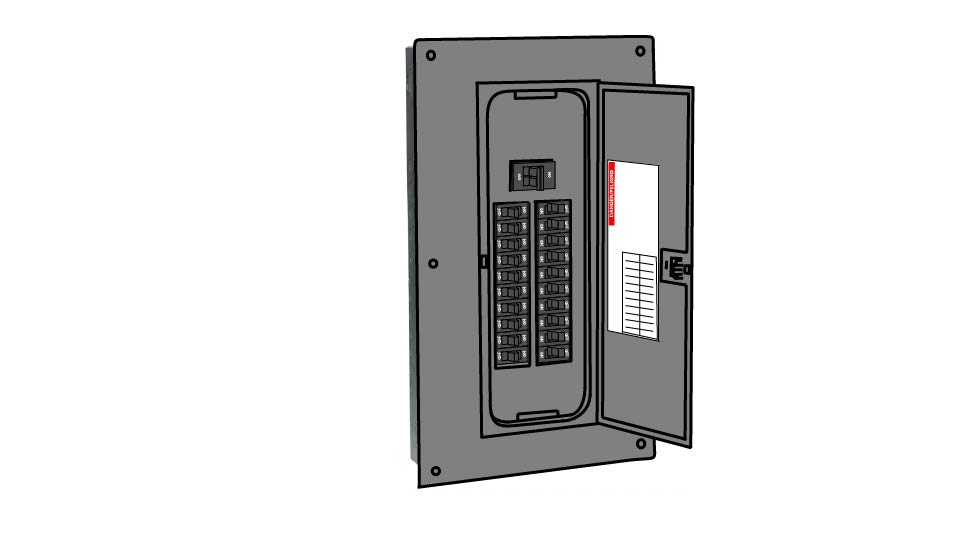
Inside your electrical panel, a circuit breaker watches the current flowing through a circuit. Each breaker is rated for a specific current (usually 15, 20, 30, or 50 amps, depending on the circuit).
If the current exceeds the breaker’s rating, the breaker trips. The switch moves to the off position, stopping current flow immediately.
Why it matters: An overloaded circuit generates heat. Too much heat melts wire insulation. Once insulation melts, exposed wires can cause a fire.
A breaker that trips is preventing this disaster.
Why Breakers Trip (The Five Main Reasons)
Reason 1: You’re Overloading The Circuit
This is the most common reason.
What it means: You’re trying to draw more current than the circuit can handle.
Example: You’ve got a toaster (1200W), a microwave (1000W), and a coffee maker (1000W) all running at the same time on a 20-amp, 120-volt circuit. That’s 3200 watts on a circuit rated for 2400 watts. Overload. Breaker trips.
The math: Volts × Amps = Watts. A 120V, 20A circuit can handle 2400W maximum.
What to do: Don’t run multiple high-power appliances on the same circuit simultaneously. Spread the load. Or call an electrician to add a circuit.
Real talk: This is user error, not a broken breaker.
Reason 2: A Short Circuit In An Appliance Or Outlet
A short circuit is when the hot and neutral wires touch (short) instead of the load using the power.
What it means: An appliance is defective, or a outlet is damaged.
Example: Your hairdryer has damaged internal wiring. When you plug it in, the wires short. Bzzzzt. Instant overload. Snap. Breaker trips.
What to do: Stop using that appliance or outlet immediately. Call an electrician to identify the problem.
Real talk: A short circuit is serious. The breaker is protecting you. Listen to it.
Reason 3: A Ground Fault (Water Or Moisture)
A ground fault is when current finds an unintended path to ground, usually through water or moisture.
What it means: Water or moisture is present where it shouldn’t be.
Example: Water is leaking into an outlet. The water provides a path for current to ground. Instant overload. Breaker trips.
What to do: Find and fix the moisture problem. Call an electrician if you’re not sure where the water is coming from.
Real talk: Your breaker just prevented electrocution or a fire. Thank it.
Reason 4: Faulty Wiring In The Circuit
Old wiring, damaged wiring, or poor connections cause resistance. Resistance creates heat. Too much heat causes breaker trips.
What it means: Something in the circuit wiring is failing.
Example: A wire connection in the wall is corroded or loose. This resistance causes heat buildup. Breaker trips.
What to do: Call an electrician. Faulty wiring is serious and requires professional repair.
Real talk: This isn’t something you fix yourself.
Reason 5: A Failing Breaker
Rarely, the breaker itself is failing. It trips even when there’s no overload.
What it means: The breaker’s internal mechanism is wearing out.
What to do: Call an electrician to replace the breaker. This is the only case where the breaker itself is the problem.
Real talk: This is uncommon. Usually, the breaker is doing its job. Something else is wrong.
How To Diagnose The Problem (And What NOT To Do)
Step 1: Don’t Just Keep Flipping It Back On
This is the biggest mistake people make. They flip the breaker back on and hope it stays. If the problem persists, you’re just ignoring a warning.
Real talk: A repeatedly tripping breaker is a sign. Pay attention.
Step 2: Identify What Was Running When It Tripped
Was it the kitchen? The bathroom? Was a specific appliance plugged in?
Real talk: This narrows down where the problem is.
Step 3: Unplug Everything On That Circuit
Breakers control circuits, not individual outlets. But outlets on the same circuit share the breaker.
Unplug everything on the tripped circuit. Flip the breaker back on. If it stays on, you’ve got an overload problem (too much stuff running simultaneously).
Real talk: If it stays on with everything unplugged, the problem is likely a short circuit or ground fault in the wiring, not an overload.
Step 4: Plug Things Back In One At A Time
Once the breaker is on, plug things back in one at a time. Turn on appliances one at a time. See what causes the breaker to trip.
Real talk: This identifies which appliance or outlet is the problem.
Step 5: Call An Electrician If:
- The breaker trips with nothing plugged in (faulty wiring or failing breaker)
- The breaker trips when you use a specific outlet (damaged outlet)
- The breaker trips when you use a specific appliance (faulty appliance)
- You smell burning or see scorch marks (serious problem)
Real talk: These are all situations beyond “I plugged in too many things.” Call a professional.
What NOT To Do
❌ Keep flipping the breaker back on without figuring out why it’s tripping You’re ignoring a warning. The next step is a fire.
❌ Replace a breaker with a higher-amp breaker “I’ll just install a 30-amp breaker instead of this 20-amp breaker.” No. The wiring is rated for the current breaker. A higher-amp breaker means the wiring can overheat before the breaker trips. Fire.
❌ Stick a penny or coin behind the breaker to hold it on This actually happened. A lot. It defeats the breaker’s protection completely. Don’t do this.
❌ Assume it’s fine if it only trips occasionally Occasional trips are warnings. Address the problem.
❌ Use extension cords to power high-draw appliances to a different circuit Extending the circuit doesn’t solve the overload. You’re just moving the problem.
Real talk: These aren’t silly suggestions. People have done all of these. Don’t be that person.
The Bottom Line
A circuit breaker that trips is doing its job. It’s protecting your house from electrical fire and you from electrocution.
Understanding why it’s tripping and addressing the root cause means:
- You don’t have to keep playing breaker roulette
- You identify real problems early
- You prevent electrical fires
- You know when to call a professional
Key principles:
- A tripping breaker is a warning, not an inconvenience
- Overloading is the most common cause (user error)
- Short circuits or ground faults are serious (call a professional)
- Never ignore a repeatedly tripping breaker
- Never replace a breaker with a higher-amp breaker
- When in doubt, call an electrician
Your breaker isn’t broken. It’s smarter than you think.
Listen to it.
Related Guides You Might Find Helpful
- How to Read an Electrical Panel: Understanding Your Breakers and Power Distribution – Understanding your panel and circuits
- Working with Electricity: The Respect You Need and the Safety You Must Practice – Electrical safety fundamentals
- How to Use a Multimeter: Testing Voltage, Current, and Resistance Without Dying – Diagnosing electrical problems
- How to Use a Voltage Tester: Confirming Power Is Actually Off Before You Touch Anything – Safety tool for electrical work
- GFCI and AFCI Outlets Explained: Protecting Against Shocks and Fires – Special protection circuits
Amazon Affiliate Recommendations
Diagnostic Tools
Multimeter (Digital, Basic, Non-Contact Option) – Measures voltage and current. Helps diagnose electrical problems.
Voltage Tester (Non-Contact, Shows Presence of Current) – Confirms power is off before you touch anything. Essential safety tool.
Outlet Tester (Tests for Proper Wiring and Grounding) – Shows if outlets are wired correctly. Helps identify problems.
Safety Equipment
Electrical Gloves (Insulated, Safety Rated) – Protection if you’re working on electrical circuits. Not for touching live wires, but safer than bare hands.
Safety Glasses – Protect eyes if something sparks or pops.
Work Flashlight (LED, Hands-Free) – Better lighting in the basement where your electrical panel lives.
Circuit Management
Power Strip with Surge Protection (Multiple Outlets) – Spreads load across outlets. Better than daisy-chaining power strips.
Heavy-Duty Power Strip (15-Amp Rated, Surge Protection) – For high-power appliances. Don’t use cheap power strips for serious loads.
Circuit Breaker Finder (Identifies Which Breaker Controls Which Outlet) – Maps your circuits so you know what’s controlled by what.
As an Amazon Associate, I earn from qualifying purchases. Click through the links above to support Skippity Whistles.
Electrical work involves risk of shock, fire, and serious injury. Never work on a live circuit. Always turn off the breaker before touching wiring. Use a voltage tester to confirm power is off. If you’re uncomfortable working with electricity, call a licensed electrician. A repeatedly tripping breaker is a warning sign—don’t ignore it. Never replace a breaker with a higher-amp breaker. Never defeat a breaker’s protection.
9024
©2026 SkippityWhistles.com All rights reserved
