
(Or: Those Buttons Are Not a Design Choice)
Ron plugged his phone charger into the bathroom outlet one morning and got nothing — no light, no charge, dead as a doornail. He unplugged it, checked the charger, tried a different outlet entirely, and was fully prepared to declare the whole bathroom electrically cursed before he noticed the small button in the middle of the outlet marked RESET. He pressed it. The outlet came back to life instantly, like it had just been waiting for someone to ask nicely.
Those push-button outlets in kitchens, bathrooms, and garages aren’t a style choice or a manufacturing quirk. They’re doing real, active work every second they’re plugged into the wall, and understanding what that work actually is makes the button a lot less mysterious.
⚡ The Problem These Outlets Solve
A regular circuit breaker protects your home’s wiring from overload, but it’s slow by design — it’s waiting for a large amount of current before it trips. If you’re standing in a puddle and touch a live wire or a faulty appliance, only a small amount of current needs to pass through you to cause real harm, and that small amount is nowhere near what it takes to trip a standard breaker. The breaker just isn’t built to catch that specific, smaller, more personal kind of danger.
🛡️ GFCI: The Fast Safety Cop
GFCI stands for Ground Fault Circuit Interrupter, and it works by constantly comparing the electricity going out on the hot wire to the electricity coming back on the neutral wire. When everything matches, nothing happens. When some current goes missing — because it’s escaping through you to the ground instead of coming back through the wire — the GFCI notices the mismatch and cuts power immediately.
A GFCI can detect a leak as small as 4 to 6 milliamps and cut power in about 25 milliseconds. For comparison, it takes roughly 100 milliseconds just to blink, and even longer for pain signals from your finger to reach your brain — meaning a GFCI can genuinely cut the power before you’ve even had time to feel the pain from an electric shock.
🔘 What the Buttons Actually Do
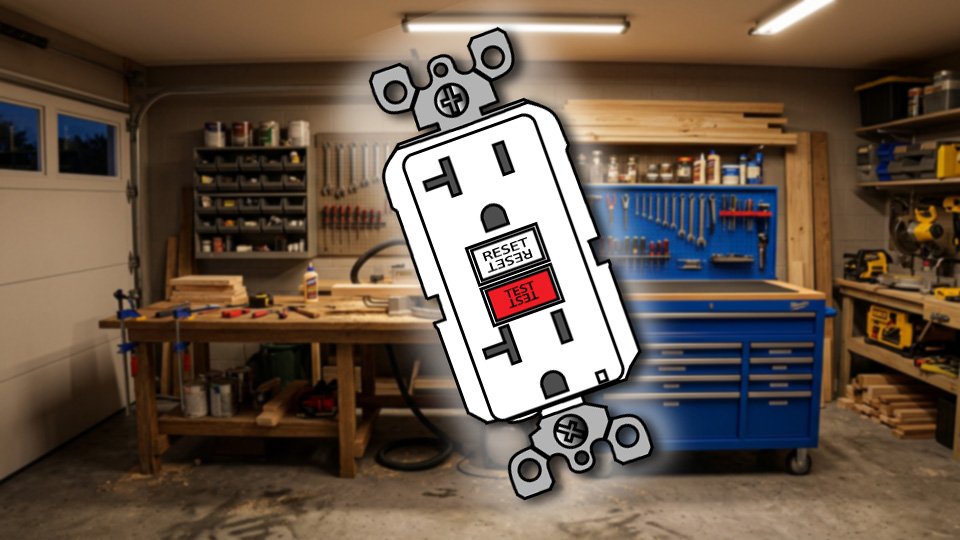
The TEST button intentionally creates a small fault to confirm the outlet’s safety mechanism is actually working — press it, and a functioning GFCI should trip immediately with an audible click. The RESET button restores power after a trip, whether that trip came from an actual fault or from testing. Test every GFCI outlet monthly; if pressing TEST doesn’t trip it, that outlet has failed and isn’t protecting anyone, and needs to be replaced.
📍 Where GFCI Protection Is Required
Building codes require GFCI protection specifically where water and electricity are most likely to meet at the same time you’re touching both — kitchen countertops, bathrooms, outdoor outlets, basements, garages, and laundry rooms. One GFCI outlet, installed first in line on a circuit, can protect every regular outlet downstream of it on that same circuit — which is why a kitchen might have just one or two GFCI outlets doing quiet duty for several ordinary-looking ones nearby.
🔥 AFCI: The Fire Prevention Cousin
AFCI stands for Arc Fault Circuit Interrupter, and it solves a different problem entirely. Where GFCI watches for current escaping to ground, AFCI watches for arcing — electricity jumping across a gap it shouldn’t be jumping across, caused by damaged insulation, a loose connection, or a worn cord. That spark runs hot enough to ignite nearby material inside a wall or an appliance, and AFCI protection is increasingly required in bedrooms, living areas, and throughout much of a modern home specifically to catch it before it starts a fire.
🤝 One Outlet, Both Protections
Combination GFCI/AFCI outlets exist and cover both hazards in a single device — pricier than either alone, but a genuine option for anyone updating outlets and wanting maximum coverage in one spot without installing two separate devices.
🔄 When One Trips
A tripped GFCI or AFCI outlet did exactly what it’s designed to do — it’s not broken, it caught something. Unplug whatever was connected when it tripped, then press RESET. If it trips again immediately, the fault is likely still present; if it stays on, plug devices back in one at a time to find the culprit. If it won’t stay reset at all, that’s a real problem with the outlet or the circuit, and it’s an electrician’s call, not a DIY one.
🧪 Testing Monthly Is Worth the Thirty Seconds
Plug in a lamp, turn it on, press TEST — the lamp should cut off immediately. Press RESET, and it should come back on. If TEST doesn’t trip the outlet, or it trips but won’t reset, that GFCI has failed and needs replacing. Thirty seconds a month is a small price for confirming a genuinely life-protecting device is still doing its job.
🛒 Gear Worth Having
GFCI Outlet Replacement Kit, Multi-Pack — Worth having a few on hand — most homes have more locations needing GFCI protection than people initially realize.
Combination GFCI/AFCI Outlet — Covers shock and fire protection in one device, for anyone updating outlets and wanting both bases covered at once.
Outlet Tester with GFCI Indicator — A cheap plug-in tool that confirms an outlet is wired and grounded correctly in seconds, no guesswork required.
As an Amazon affiliate, I earn from qualifying purchases. Thank you for supporting SkippityWhistles.
📖 Related Reads
SkippityWhistles is part of the WhistleBump group – find the rest of the family at WhistleBump.com.
9014
©2026 John D Reinhart/Skippitywhistles.com — All rights reserved