
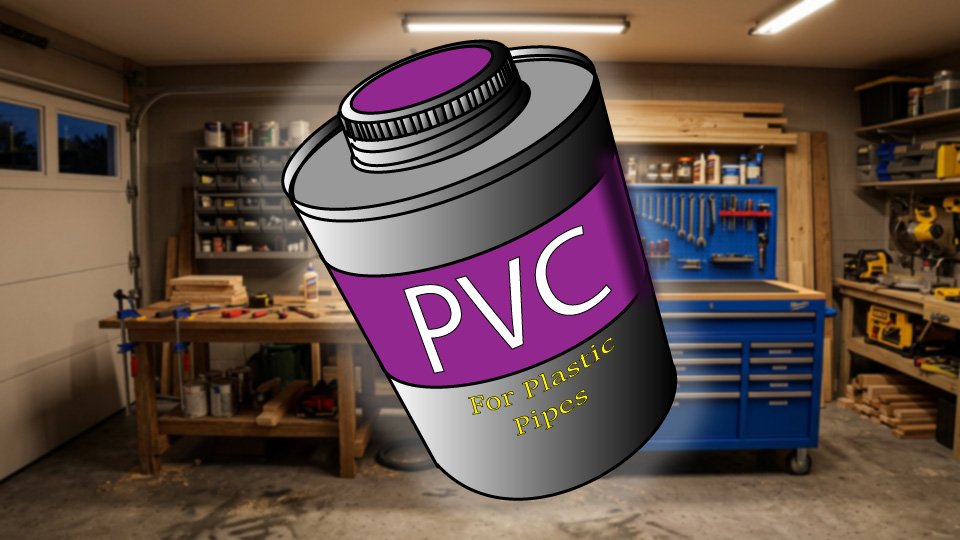
Ron pressed a PVC fitting into place, decided mid-press that it needed a slight twist to “seat it better,” and gave it one. The pipe accepted the twist permanently, at an angle nobody wanted, because PVC cement isn’t glue holding two pieces together — it’s a solvent that dissolves the plastic and fuses both pieces into one continuous piece. There’s no repositioning a joint that’s already become a single object. Ron’s friends look at it and ask “did you fix that yourself?”
That one distinction — dissolve-and-fuse, not stick-and-hold — explains almost everything about how to work with it correctly.
🧪 Not Glue — A Solvent
PVC cement chemically softens the outer layer of both the pipe and the fitting. When pressed together, the two surfaces merge as the solvent evaporates.
Regular glue bonds two separate things; PVC cement makes them stop being two things. That’s why it’s irreversible — once fused, only a saw separates the joint again, not a wrench or a pull.
🎨 Matching Cement to Plastic
- Standard PVC cement (usually purple or clear) is right for the Schedule 40 PVC used in most residential plumbing.
- CPVC cement is required for CPVC (chlorinated PVC, often used for hot water lines). The two aren’t interchangeable, and using the wrong one simply won’t bond.
- ABS cement is required for ABS, a plastic from an entirely different chemical family, common in older drain lines.
- A combination cement rated for both PVC and CPVC exists and is worth the small extra cost on any project where you’re not entirely sure which plastic you’re holding.
🔵 Primer Isn’t Optional (Usually)
Most plumbing codes require a primer (typically a blue-tinted liquid) applied before cement, and for good reason — it strips away surface oxidation and oils, softens the plastic slightly, and gives the cement a cleaner surface to fuse against. Skipping it on anything pressurized, underground, or carrying hot water is both a code violation and a genuine risk to joint strength. When unsure, use it — a dollar of primer beats redoing a joint an inspector rejects.
🛠️ The Process: One Shot, Make It Count
- Cut the pipe cleanly and deburr the edge – use a deburring tool, a file, or sandpaper to smooth the cut edge of the pipe. Rough edges prevent a proper fit and could weaken the fused joint.
- Confirm everything is dry, clean, and correctly aligned before touching any cement, since this is the step where mistakes are still fixable.
- Apply primer if required – it usually is.
- Apply the cement, coating the outer pipe edge and the inner fitting surface evenly — not a soaking coat, just full coverage.
- Press the pipe into the fitting with firm, straight, deliberate pressure — no twisting, which misaligns the joint rather than seating it.
- Hold the parts together for the time the label specifies, usually 10 to 30 seconds.
- Leave it completely alone. Light cure is often reached within 2 hours, but full cure for pressure testing can take a full 24, and rushing that step is one of the more common ways a fine-looking joint fails later. Leave. It. Alone.
❄️ Cold Weather Changes the Math
PVC cement cures noticeably slower below about 50°F, and will result in a genuinely weaker joint. If the project can wait for warmer conditions, do that. Or warming the the materials before cementing will be an effort worth doing rather than trusting a joint that cured too slowly in the cold to be fully sound.
🛒 Gear Worth Having
Oatey All-In-One PVC Cement with Primer — Combines primer and cement for smaller residential jobs, so there’s one less product to keep track of mid-project.
PVC Ratcheting Pipe Cutter — A clean, square cut with no burrs to file down afterward, which matters more than it seems once you’re trying to get a snug fit.
Nitrile Gloves, Solvent-Resistant, 100-Pack — PVC cement stains skin for days and isn’t something you want soaking in through bare hands over a whole project.
As an Amazon affiliate, I earn from qualifying purchases. Thank you for supporting SkippityWhistles.
📖 Related Reads
SkippityWhistles is part of the WhistleBump group – find the rest of the family at WhistleBump.com.
2011
©2026 John D Reinhart/Skippitywhistles.com — All rights reserved