

Ron had a theory, and the theory was this: a good adjustable wrench should be able to handle basically anything, because it adjusts, which is right there in the name.
He tested this theory extensively on nuts, bolts, and a pipe fitting that ended the experiment early by simply refusing to grip at all. A few rounded corners and one memorably stuck fitting later, Ron discovered what actual machine shops figured out a long time ago — different fasteners genuinely need different wrenches, and no amount of adjusting closes that gap.
A wrench isn’t one tool wearing different sizes. It’s a small family of tools, each solving a specific gripping problem, and matching the right one to the job is most of the actual skill.
🔧 Adjustable Wrench: The Generalist
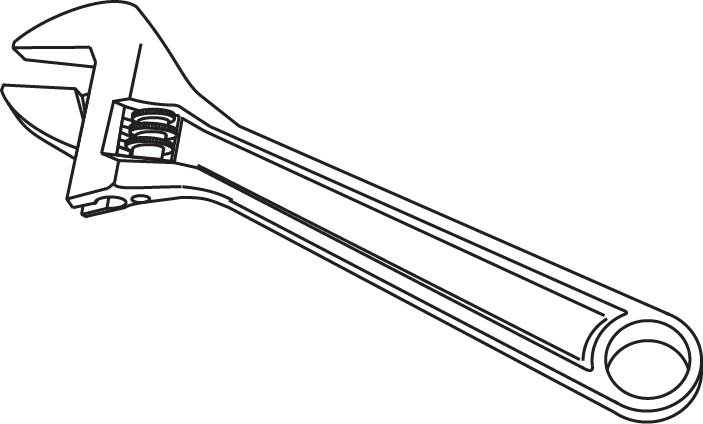
Also called a crescent wrench, this is the tool for when you don’t know the exact size or need one wrench to cover several. It’s flexible and convenient, but less precise than a fixed-size tool — a real solution for light-to-medium DIY work and odd sizes, not the do-everything champion Ron initially hoped for. The full technique gets its own dedicated post below.
🔧 Pipe Wrench: Round Surfaces Only
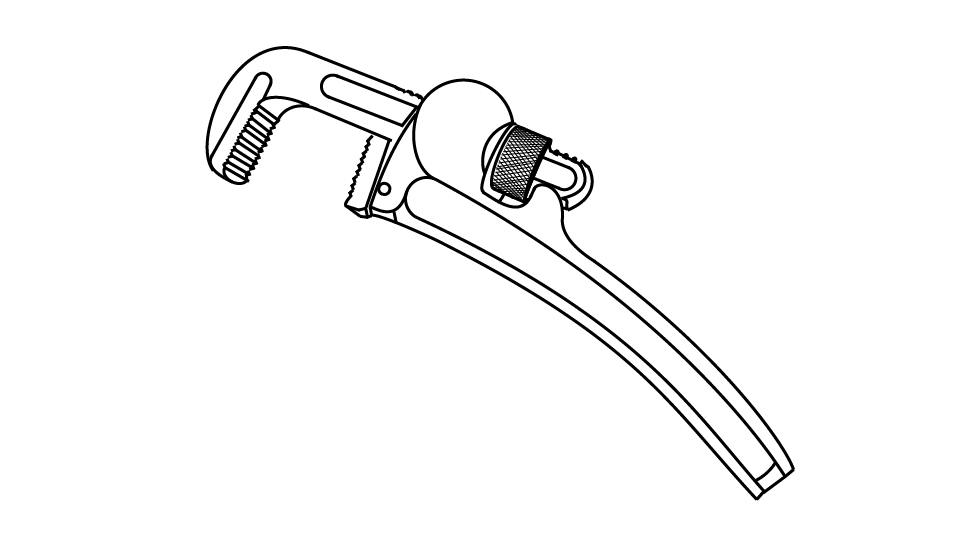
Serrated jaws that bite harder into round pipe the more force you apply — genuinely excellent on plumbing, genuinely terrible on nuts and bolts, since those teeth will mar any finished surface they touch. This is the fitting that ended Ron’s one-wrench experiment early. Full mechanism and technique covered in its own dedicated post as well.
🔧 Socket Wrench: Speed and Torque
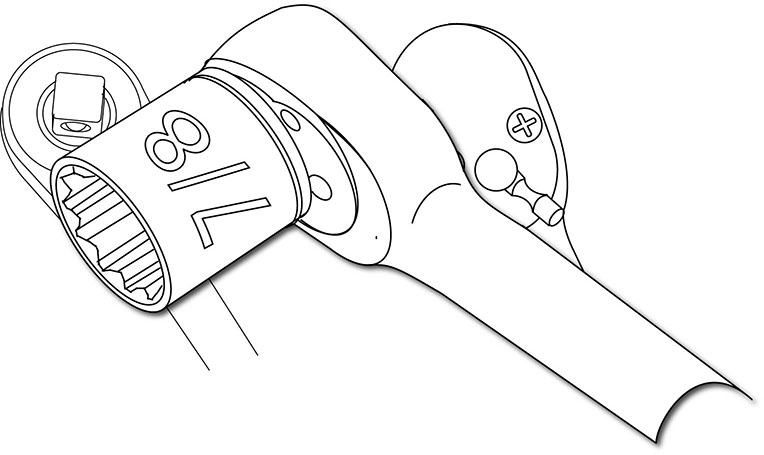
Interchangeable sockets paired with a ratcheting handle mean fast, repeated turning without repositioning your grip after every twist — the standard choice for automotive work, enclosed spaces, and anything demanding real torque. Selecting the right socket size matters here just as much as picking the right wrench type in the first place.
🔧 Spanners: Precision Over Range

Open-end, box-end, and combination wrenches — collectively called spanners — trade an adjustable wrench’s flexibility for a fixed size that fits one fastener precisely and doesn’t slip. For anything metal and precision-fastened, this fixed fit beats an adjustable wrench’s approximate one every time.
🎯 Torque Wrench: When “Tight” Needs an Actual Number
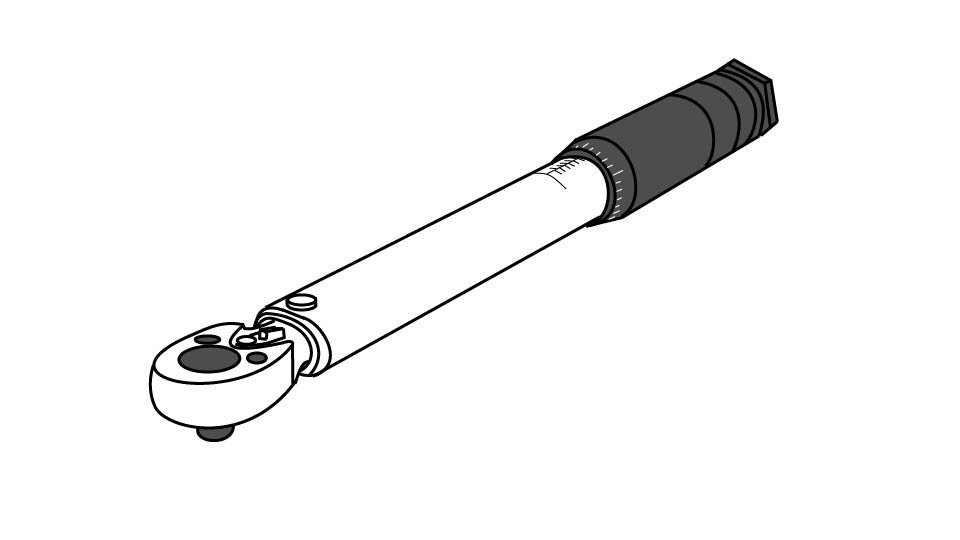
Most fasteners just need to be snug. Some — engine components, structural bolts, anything with a manufacturer-specified torque value — need to be tightened to an exact number, not a feeling. A torque wrench measures and stops at that number, which is the entire reason it exists as its own category rather than just being a stronger regular wrench.
📏 Matching Size Exactly Is the Whole Game
A wrench that’s even slightly loose on a fastener rounds the corners with every turn, and once a fastener’s corners are rounded, no wrench grips it cleanly again — that’s genuinely how fasteners go from “annoying” to “now I need an extraction tool.” Precision here isn’t fussiness. It’s the difference between a bolt that comes loose in two seconds and one that becomes its own separate project.
🛡️ Safety Basics
- Pull the wrench toward you rather than pushing whenever the setup allows — a slip while pulling tends to miss your knuckles, while a slip while pushing tends to find them directly.
- Wear eye protection on stubborn fasteners, since something eventually lets go all at once.
- And skip the cheater bar — extending a wrench handle with a length of pipe generates enough leverage to bend the tool or over-torque the fastener, neither of which ends the job any faster.
🛒 Gear Worth Having
CRESCENT 10-Inch Adjustable Wrench — The reliable everyday generalist — genuinely useful, just not the universal answer Ron originally hoped for.
DEWALT Mechanics Tool Set with Ratcheting Sockets — Fast, precise turning across a full range of sizes, without repositioning your grip after every twist.
TEKTON Combination Wrench Set, SAE and Metric — Fixed sizing that fits precisely instead of approximately, covering both measurement systems most households eventually run into.
As an Amazon affiliate, I earn from qualifying purchases. Thank you for supporting SkippityWhistles.
📖 Related Reads
SkippityWhistles is part of the WhistleBump group – find the rest of the family at WhistleBump.com.
7013
©2026 John D Reinhart/Skippitywhistles.com — All rights reserved