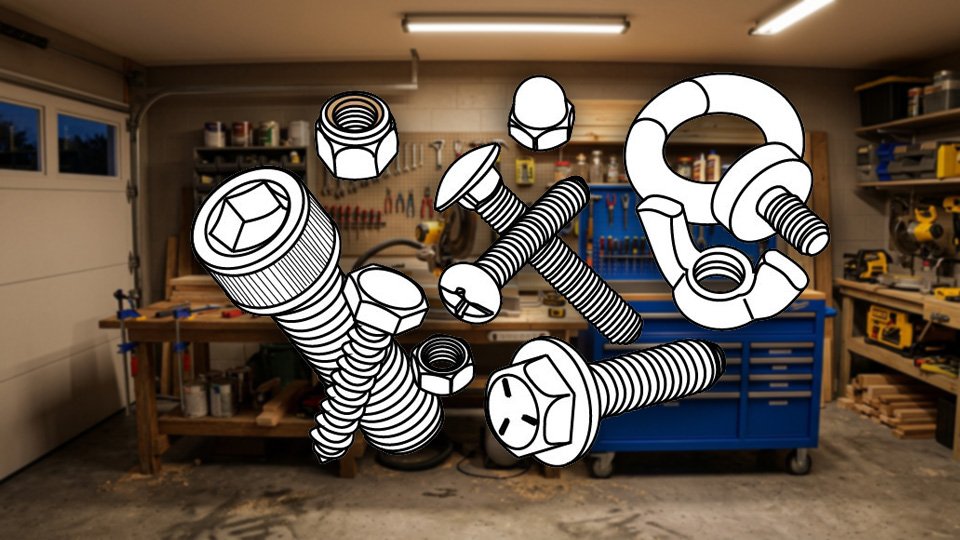
Walk into the hardware aisle and stare at the fastener section. Hex bolts, carriage bolts, lag bolts, cap nuts, lock nuts, fender washers, Grade 5, Grade 8, coarse thread, fine thread. The whole aisle feels like a mechanical dictionary fell off a shelf.
Here’s the thing: you don’t need to understand every variation on the shelf. You need to understand how bolted connections work. Once you understand the principle — how a bolt and nut create clamping force — choosing the right hardware becomes obvious. Everything else is details.
Here’s how it works.
⚡ How a Bolt Actually Works
A bolt is not a screw.
A screw threads directly into the material it’s fastening — wood, drywall, metal. The strength of a screw lies in the grip the screw’s threads (the sharp spiral around the outside) have on the material.
A bolt passes all the way through the material and is secured on the other side with a nut. That distinction matters because it changes what the connection can do.
When you tighten a bolt and nut together, the bolt stretches slightly under tension. The nut resists that tension from the other side. The materials sandwiched between the bolt head and the nut get squeezed together — clamped. That clamping force is what makes a bolted connection strong. The whole joint shares the load across the contact area between the surfaces, not just at the threads.
This is why bolts are the right choice for structural connections, joints that will experience vibration or stress, and anything that might need to come apart later. Screws are convenient. Bolts are dependable. For connections that matter, bolts usually win.
🔵 Hex Bolts — The One You’ll Reach For Most
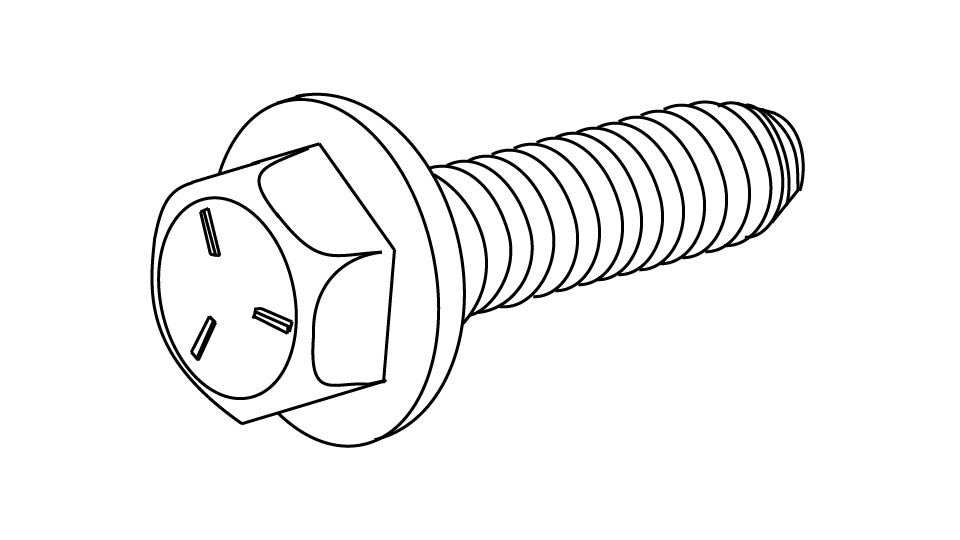
A hex bolt has a six-sided head that tightens with a wrench or socket. It’s the workhorse of the fastener world — the bolt that handles structural framing, deck ledgers, outdoor projects, and anything that needs serious, reliable strength.
The hex head distributes tightening force evenly and gives a wrench or socket a solid grip from six different angles. It’s not elegant, but it holds. When there’s no specific reason to use something else, hex bolts are the default.
You’ll see “hex bolt” and “hex cap screw” used interchangeably at most hardware stores, and for most DIY purposes they perform the same job. The technical difference — tighter manufacturing tolerances and a washer face built into the cap screw head — matters in precision mechanical applications, not in lumber and deck construction. If it has a six-sided head and the size and grade match the project, it works.
🟤 Carriage Bolts — The Wood-Friendly Option
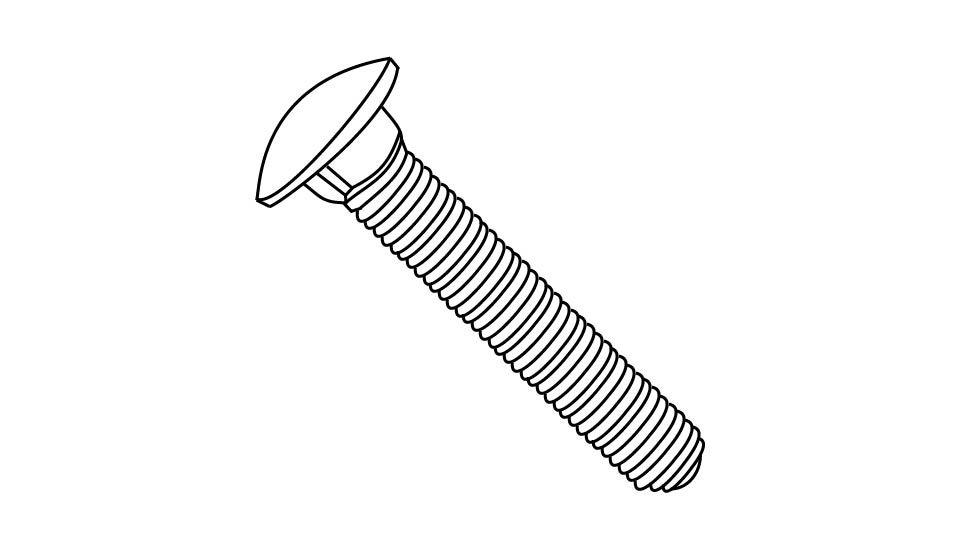
A carriage bolt has a smooth, rounded dome head with a square section just below it. That square shoulder is the functional feature: when you push a carriage bolt through a drilled hole in wood, the square shoulder bites into the wood and prevents the bolt from spinning while you tighten the nut from the other side. No second wrench needed on the bolt head.
This makes carriage bolts ideal for wood-to-wood connections — decks, fences, gates, outdoor furniture — where holding a wrench on both sides would be awkward or impossible. The rounded dome head also looks cleaner than a hex head on visible surfaces, which is why carriage bolts show up wherever appearance matters alongside strength.
🪵 Lag Bolts (Lag Screws) — The Structural Wood Fastener
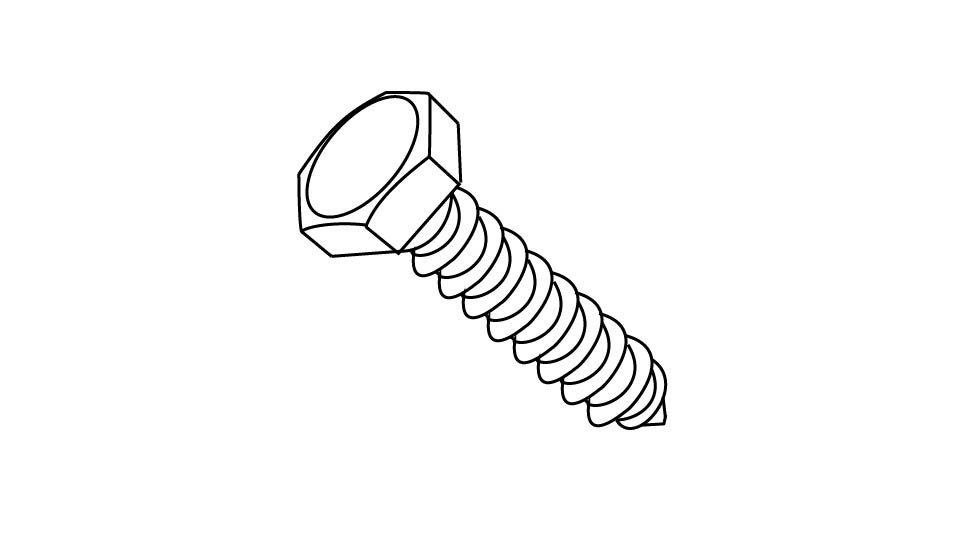
Lag bolts look like very large hex-headed bolts but work like screws — they thread directly into wood without a nut. The distinction matters enough that they’re technically called lag screws, but the name “lag bolt” has stuck because they look like bolts and are sized like bolts.
They’re for heavy structural connections into wood: ledger boards fastened to house framing, mounting heavy items into studs, and any application where you need serious pulling strength into solid wood. The large threads and substantial diameter create a hold that smaller screws can’t match.
Lag screws require a pilot hole — a pre-drilled hole slightly smaller than the bolt diameter — before installation. Skip the pilot hole and the wood can split, or the lag screw strips the threads it’s trying to create. The pilot hole is not optional.
🔒 Lock Nuts — The Ones That Stay Put
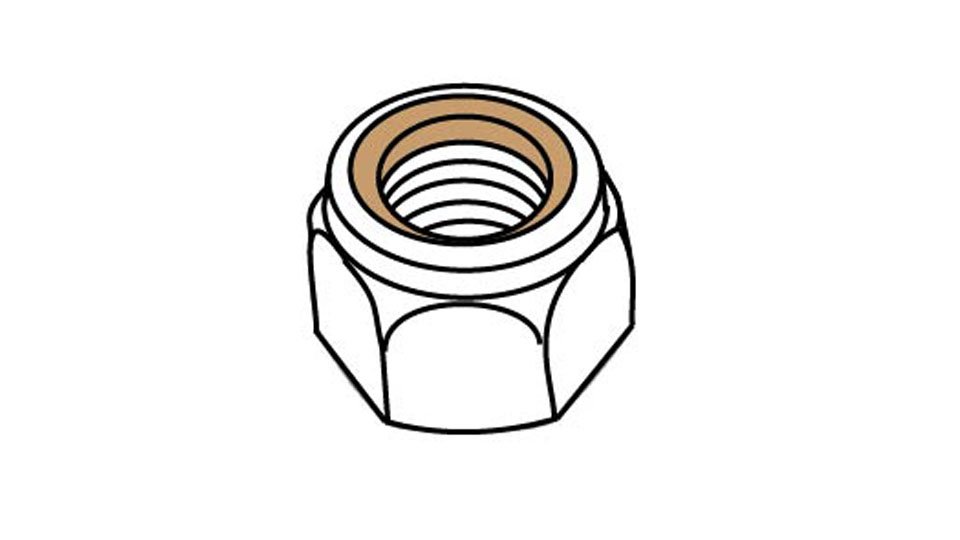
A standard hex nut tightens against the bolt and stays put under normal conditions. Under vibration — from machinery, from engines, from the general shaking that happens in the real world — it can back off slowly until the connection loosens. A lock nut solves this.
The most common type is the nylon insert lock nut (also called a nyloc nut — a plastic nylon ring inside the nut that grips the bolt threads when tightened). The nylon deforms slightly around the threads, creating friction that resists loosening. Once a nyloc nut is seated, it doesn’t back off under vibration.
Use them on anything that moves, shakes, or vibrates: lawn equipment, appliances, furniture with mechanical parts, outdoor installations exposed to wind loading. They cost slightly more than standard nuts and are worth it every time.
🪣 Washers — The Part Everyone Skips and Shouldn’t
A washer is a flat ring of metal — or a split ring in the case of a lock washer — that sits between the bolt head and the surface, and between the nut and the surface on the other side.
Flat washers distribute the clamping load across a larger area. Without a washer, the bolt head or nut bears against a small contact area, which can compress or damage softer materials — wood, drywall, plastic — and allows the bolt to sink in over time as the material compresses. A washer spreads that load. It also protects the surface from being marred by the rotating bolt head during tightening.
Lock washers add vibration resistance. A split lock washer has a small gap that creates a spring effect, maintaining pressure against the nut even as the joint vibrates slightly. They’re used under nuts on connections that will experience movement.
The practical rule: use a flat washer under every bolt head and every nut, on every project. A washer costs a few cents. The repair it prevents costs considerably more.
📊 Bolt Grades — Strength Ratings Made Simple
Bolts are graded by strength, and the grade is marked on the bolt head with radial lines — the lines that look like clock positions stamped into the top of the bolt.
No markings means Grade 2 — basic strength, light-duty applications. Three radial lines means Grade 5 — medium-high strength, suitable for the vast majority of home and construction projects. Six radial lines means Grade 8 — very high strength, for heavy structural and mechanical applications where the specifications call for it.
Grade 5 handles nearly everything a homeowner encounters. Deck construction, outdoor furniture, shelving hardware, general structural connections — Grade 5 is the right choice and doesn’t require the premium cost of Grade 8. When a specification, building code, or manufacturer instruction calls for Grade 8, use it. Otherwise, Grade 5 is correct.
🛒 Gear Worth Having
1035-Piece Grade 5 Nut, Bolt & Washer Assortment — Hex Bolts, Hex Nuts, Lock & Flat Washers, 30 Bins — The assortment that ends the hardware store trips. 1,035 Grade 5 hex bolts, hex nuts, lock washers, and flat washers in 1/4″, 5/16″, 3/8″, and 7/16″ sizes, organized in 30 labeled bins. Every size you’ll use regularly in home DIY, all in one organized unit that sits on a shelf and stays there. The bins are labeled so finding the right piece takes seconds rather than sorting through a coffee can. This is the investment that pays for itself on the first project it saves a trip for.
Carriage Bolt Assortment — 1/4″-20 & 5/16″-18, with Nuts and Washers, 100 Pieces — The wood-connection companion to the hex bolt assortment. Carriage bolts in the two most common residential sizes, with matching nuts and washers included. Covers deck railings, fence construction, outdoor furniture, and any wood-to-wood connection where the rounded head and self-locking square shoulder make the job easier. Hot-dip galvanized for outdoor use.
Nylon Insert Lock Nut Assortment — 1/4″-20, 5/16″-18, 3/8″-16, 140 Pieces — Nyloc lock nuts in the three most common residential bolt sizes. The nylon ring inside each nut grips the bolt threads and resists loosening under vibration. Use them anywhere a standard nut might back off over time: outdoor connections, equipment mounting, anything that shakes or moves seasonally. Stainless steel for corrosion resistance. Keep these alongside the main assortment — cheap insurance against connections that gradually loosen themselves.
As an Amazon affiliate, I earn from qualifying purchases. Thank you for supporting SkippityWhistles.
📖 Related Reads
The hardware aisle stops being overwhelming the moment the underlying principle is clear: a bolt and nut create clamping force, the grade determines how much load the connection handles, and a washer under every head and nut protects the surface and distributes the load. Everything else — the specific bolt type, the nut style, the washer size — follows from what the joint needs to do. Know the principle and the hardware aisle becomes a resource rather than a riddle.
SkippityWhistles is part of the WhistleBump group – find the rest of the family at WhistleBump.com.
2017
©2026 John D Reinhart/Skippitywhistles.com — All rights reserved