
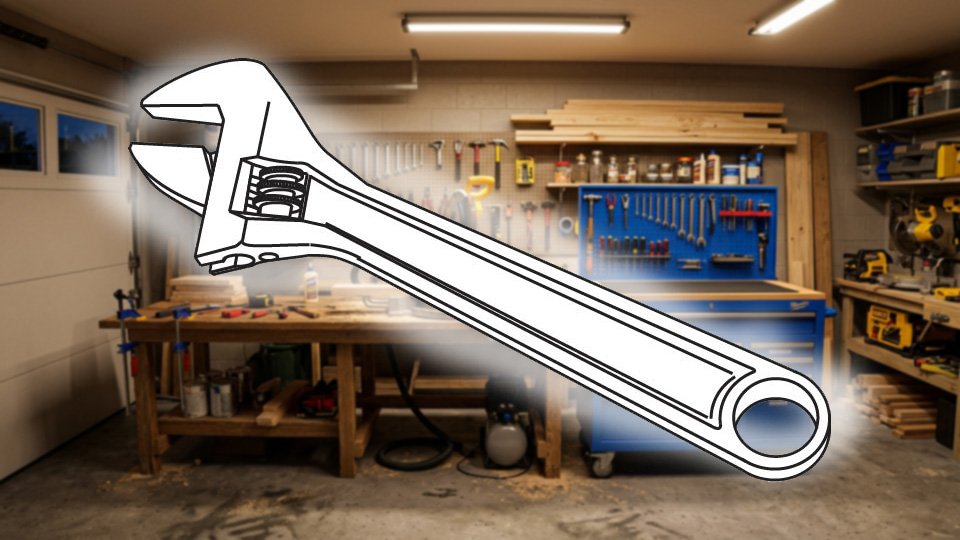
Ron Screwstrip’s dad had an adjustable wrench hanging on the pegboard in the garage for as long as Ron could remember. It was old, a little beat up, and it turned up in Ron’s hands every time something under the sink needed tightening. Ron used it confidently for years.
He was holding it backwards for most of that time.
The adjustable wrench — also called a crescent wrench, after the Crescent brand that popularized it over a hundred years ago — is one of the most useful tools in a home toolbox. It’s the one wrench that fits almost any nut or bolt without you knowing the size in advance. Used correctly, it’s a workhorse. Used incorrectly — and one specific mistake is extremely common — it rounds off fasteners and teaches you vocabulary your father probably didn’t intend.
Here’s how to use it correctly, start to finish.
🔩 What an Adjustable Wrench Actually Is
An adjustable wrench has two jaws — one fixed and one movable. The fixed jaw is built into the body of the wrench and doesn’t move. The movable jaw slides in and out using a small wheel on the side of the wrench called the thumbwheel or worm gear. Turn the thumbwheel one way and the jaws open wider. Turn it the other way and they close. The idea is that you can set the jaw width to match whatever nut or bolt you’re working with, instead of needing a different wrench for every fastener size.
This makes it the versatile option — the wrench you reach for when you’re not sure what size you’re dealing with, or when you don’t want to dig through a full socket set for a single job. Plumbing fittings, nuts and bolts, general household repairs, that one thing under the bathroom vanity that’s been dripping for three weeks — adjustable wrench territory.
🎯 The One Thing You Must Get Right: Which Way to Hold It
This is the piece Ron’s dad forgot to mention, and it’s the reason so many people round off fasteners they were trying to tighten.
An adjustable wrench has a fixed jaw and a movable jaw. The fixed jaw is stronger — it’s part of the wrench body, machined from solid steel, not going anywhere. The movable jaw is attached to a sliding mechanism and is inherently less rigid under heavy force.
When you apply force to turn a fastener, that force should be directed toward the fixed jaw, not the movable one. If the wrench slips — if the fastener is stubborn or the fit is slightly loose — the jaws close tighter against the fixed jaw side. If you’re pushing toward the movable jaw side, the jaws can spring open slightly under load, the wrench skips off the fastener, and the corners of the nut get rounded off. Round corners mean the wrench can’t grip properly anymore, and now you have a much bigger problem.
Here’s the practical rule: when you’re looking at the wrench from the side with the opening facing up, the fixed jaw is the one on the bottom, closer to the handle. Position the wrench so that when you pull it toward you — which is the correct motion, more on that in a moment — the force goes into the fixed jaw. If you’re tightening a nut (turning clockwise), the fixed jaw should be on the left side of the fastener as you face it. If you’re loosening (counterclockwise), the fixed jaw goes on the right.
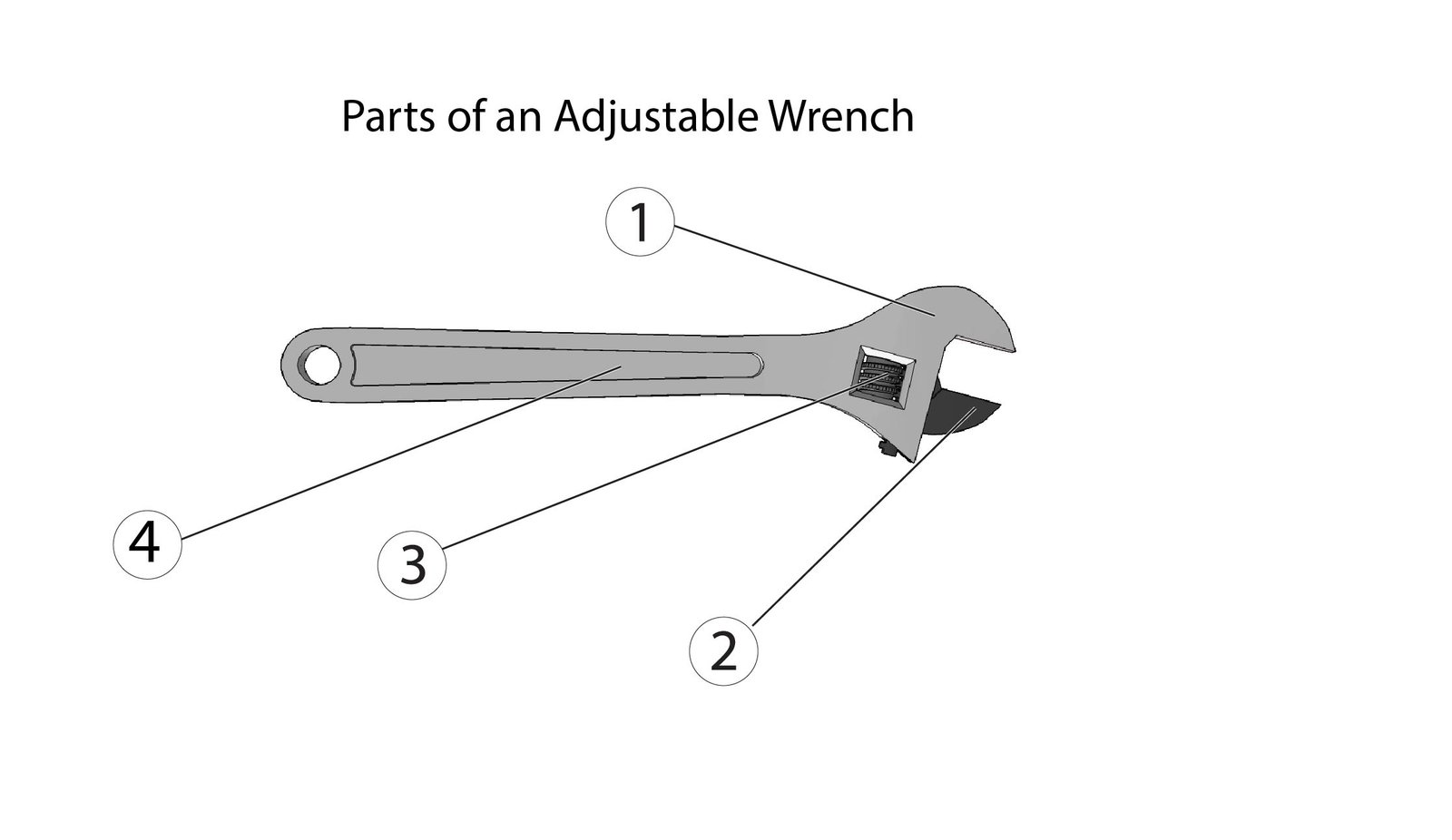
It sounds complicated written out but it becomes instinctive within a few uses. The quick check: when you pull the handle toward you, you should feel the jaws tighten against the fastener, not loosen. If the wrench feels like it wants to slip off when you pull, rotate the wrench 180 degrees and try again.
⚙️ Setting the Jaw Width
Turn the thumbwheel until the jaws fit snugly around the nut or bolt. Snugly means no visible gap between the jaw faces and the flat sides of the fastener. When the fit is right, the wrench shouldn’t wiggle when you move the handle. If it wiggles, tighten the jaws another half-turn.
A loose fit is the primary cause of rounded fasteners. The jaws need full contact with the flat sides of the nut — not the corners, which is where a loose wrench sits and which is also what gets damaged when the wrench slips. Flat sides, full contact, no wiggle.
Adjustable wrenches are not a “set it and forget it” tool for the whole job. Check the jaw fit every few turns, especially on stubborn fasteners. The thumbwheel can back off slightly under repeated force. A thirty-second re-check is cheaper than a rounded fastener.
💪 Pull, Don’t Push
Whenever possible, pull the wrench handle toward you rather than pushing it away. This applies to most hand tools but it matters especially with an adjustable wrench.
Pulling gives you more control, more consistent force, and keeps your knuckles out of the path of the wrench if it slips. Pushing means you’re working against your own leverage, and if the wrench breaks free of the fastener unexpectedly — which happens — your hand goes forward into whatever is in front of it. In tight spaces under a sink or in an engine compartment, “whatever is in front of it” is usually something unpleasant.
In spaces where you can only push, go carefully and use a slower, more deliberate motion. But whenever the geometry allows it, pull.
📐 Choosing the Right Size Wrench
Adjustable wrenches come in several lengths, and the length determines both the maximum jaw opening and the amount of leverage the handle provides.
A 6-inch wrench is for small fasteners and tight spaces — under sinks, behind appliances, anywhere a longer wrench won’t fit. Its jaw opens to about 15/16 of an inch, which covers most small household fasteners.
An 8-inch wrench is the all-purpose size for most homeowners. It fits the majority of plumbing fittings and standard nuts and bolts, and it’s short enough to maneuver in most situations. If Ron is going to own one adjustable wrench, this is the one.
A 10-inch wrench handles larger fasteners and provides more leverage for stubborn ones. It’s the right choice when the 8-inch runs out of jaw capacity or when you need extra turning force without resorting to a pipe wrench.
A 12-inch wrench is for serious plumbing work and larger fasteners — the kind of job where you know you need the bigger tool before you start.
For most home toolboxes, an 8-inch and a 10-inch together handle ninety percent of situations. A 6-inch is worth adding if you do any work in tight spaces.
🚫 The Mistakes That Round Fasteners and Bruise Knuckles
Using the wrench with loose jaws is the most common error and the most damaging. A loose fit means the wrench is gripping the corners of the fastener instead of the flat sides. The corners get rounded off with each slip, and a rounded fastener is a problem that requires pliers, penetrating oil, and increasingly colorful language to resolve. Snug jaw fit, every time.
Applying force toward the movable jaw side is the second most common error — the one Ron’s dad forgot to mention. The movable jaw side is the weak side. Remember: force goes toward the fixed jaw.
Using a wrench that’s too small for the fastener is a knuckle-buster waiting to happen. If you have to open the jaws all the way to their maximum capacity to fit the fastener, the wrench is too small for that job. A jaw at full extension has less rigidity and is more likely to slip. Get a bigger wrench.
Using an adjustable wrench as a hammer is a thing people do when they’re frustrated and don’t have a hammer nearby. It damages the moving parts of the wrench and it’s not particularly effective as a hammer either. Use a hammer as a hammer.
For fasteners that genuinely won’t budge — seized, corroded, or just very tight — a fixed-size combination wrench or a socket wrench with a breaker bar is a better choice than applying extreme force to an adjustable wrench. The adjustable wrench is the versatile option, not the heavy-duty option.
🛒 Gear Worth Having
Crescent 3-Piece Adjustable Cushion Grip Wrench Set — 6″, 8″ & 10″ — The original crescent wrench, made by the company that invented it. Heat-treated forged alloy steel, hex jaw design that grips fasteners instead of skating off them, cushioned handle, chrome finish that wipes clean and resists rust. Three sizes covers the full range of household jobs. This is the set Ron’s dad would have bought if it had been available.
Klein Tools D5074 Adjustable Wrench Set — 6″, 8″, 10″ & 12″, 4-Piece — Klein has been making professional-grade hand tools since 1857. The extra-capacity jaws fit larger fasteners than standard adjustable wrenches of the same length, the forged alloy steel handles serious torque, and the laser-etched metric and SAE scales let you identify fastener sizes before you commit to a fit. Four sizes for the toolbox that means business.
WORKPRO 3-Piece Adjustable Wrench Set — 6″, 8″ & 10″, Forged Carbon Steel — The budget-conscious option that doesn’t feel like one. Forged carbon steel, chrome-plated finish, rubber grip handles, SAE and metric scales. For the homeowner who needs a solid set of adjustable wrenches without committing to a professional-grade price point. Good tools at a fair price.
As an Amazon affiliate, I earn from qualifying purchases. Thank you for supporting SkippityWhistles.
📖 Related Reads
Ron Screwstrip now holds his adjustable wrench correctly. The fixed jaw faces the direction of pull. The jaws are snug before he applies any force. His fasteners are not rounded. His knuckles are largely unscathed. He has not mentioned this to anyone, but he does feel better about the whole thing.
SkippityWhistles is part of the WhistleBump group – find the rest of the family at WhistleBump.com.
7011
©2026 John D Reinhart/Skippitywhistles.com — All rights reserved