
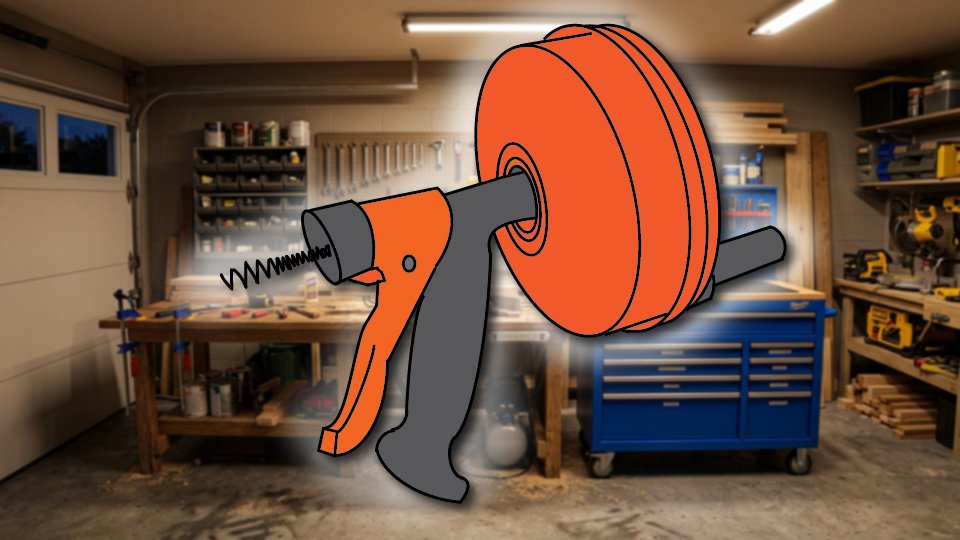
Ron once spent forty-five minutes snaking his bathroom sink because it was draining slow, before his neighbor mentioned that the toilet, the tub, and the washing machine had all been backing up too — at which point the sink was never the problem. The whole house was feeding into one pipe, and that pipe was the one actually in trouble.
Every fixture in your house — sinks, toilets, tubs, the washer — eventually feeds into a single line leaving the building. Understanding that line, and where your responsibility for it starts and stops, turns a mystery backup into a much shorter phone call.
🏠 The Lateral Is Yours. The Main Is Not.
Your sewer lateral (the pipe running from your house out to the connection point at the municipal sewer main, usually under the street) is your responsibility to maintain and repair, even though most of it is buried outside your house. The main line (the larger pipe under the street that collects wastewater from every home’s lateral on the block) belongs to the city or municipal utility. If only your house is backing up, the problem is almost always in your lateral. If your neighbors are also having trouble at the same time, the problem is more likely the municipal main — and that’s a call to the city, not a plumber.
🔓 The Cleanout You Probably Already Have
A sewer cleanout (a capped pipe fitting, usually a few inches wide, sitting near the foundation or somewhere in the yard, that gives direct access to the sewer lateral for clearing clogs) exists on most homes built after the mid-20th century, and a lot of homeowners never notice it’s there. Finding it before there’s a problem — usually a black or white plastic cap, sometimes flush with the ground, sometimes capped with a short pipe sticking up a few inches — means the difference between a controlled cleanup and full-panic mode the day something backs up.
🌳 Why Tree Roots Are the Recurring Villain
Older sewer laterals made of clay or cast iron develop hairline cracks and joint gaps over decades. Tree roots, chasing the moisture and nutrients seeping out of those cracks, grow directly into the pipe and slowly fill it, catching paper and waste until the line chokes down to a trickle. This isn’t rare or unlucky — it’s the single most common cause of a repeat sewer backup in any neighborhood with mature trees, and it comes back if the roots aren’t fully cleared, not just pushed aside.
🚨 Reading the Warning Signs
Slow drainage in just one fixture usually means a localized clog in that fixture’s own drain line. Multiple fixtures backing up at the same time, especially the lowest drain in the house (often a basement floor drain or the lowest-level toilet), points to a blockage in the main sewer lateral itself, since everything upstream is now competing to drain through the same jam. Gurgling sounds from drains when a different fixture runs, water surfacing in the yard, or unusually lush green patches over the lateral’s path are all signs the lateral itself needs attention — not just the fixture you happened to notice first.
🛠️ Where DIY Ends
A single slow drain is reasonable DIY territory. A full lateral blockage generally isn’t — clearing a main line properly usually requires a motorized drum auger (a powered cable machine that pushes a rotating cutting head through the pipe to break up and clear blockages) with enough cable length and cutting power to reach 50 to 100 feet through pipe that a hand-crank drain snake was never built to handle. Pushing a short store-bought snake into a cleanout expecting main-line results is a common and understandable mistake — the tool just isn’t sized for the job.
🛒 Gear Worth Having
RIDGID K-400 Drum Auger — A motorized cable machine with enough reach and cutting power for a real lateral clog, not just a slow bathroom sink. The tool that actually matches the job once a single fixture becomes the whole house.
Depstech Sewer Inspection Camera with Locator — Lets you actually see what’s happening 40 feet down the lateral — roots, a crack, a sag — before paying a plumber just to find out what you’re dealing with.
Roebic K-77 Root Killer Foaming Treatment — A once- or twice-a-year pour-and-forget treatment that kills roots inside the pipe without harming the tree itself, which turns a recurring clog into a maintenance schedule instead of a recurring emergency.
As an Amazon affiliate, I earn from qualifying purchases. Thank you for supporting SkippityWhistles.
📖 Related Reads
- How Standard Toilets Flush: The Chain Reaction Behind One Handle
- Understanding P-Traps and S-Traps
- How Does a Push-Button Toilet Work?
SkippityWhistles is part of the WhistleBump group – find the rest of the family at WhistleBump.com.
3010
©2026 John D Reinhart/Skippitywhistles.com — All rights reserved