Ron’s toilet only has one flush option, which he considers a feature, not a limitation. “Nothing to overthink,” he says, pushing the handle the exact same way every time regardless of what’s being flushed. He’s not wrong that it’s simple. He’s just never once wondered what happens in the two seconds between pushing the handle and the water actually moving — which is a longer chain of parts than the one button suggests.
A standard, single-flush toilet looks like the simplest fixture in the house because it only asks you to do one thing. Underneath, it’s a small, deliberate sequence of parts triggering each other in order — and knowing that sequence is what turns a mysterious running toilet into an obvious two-minute fix.
🎯 It Starts With the Trip Lever
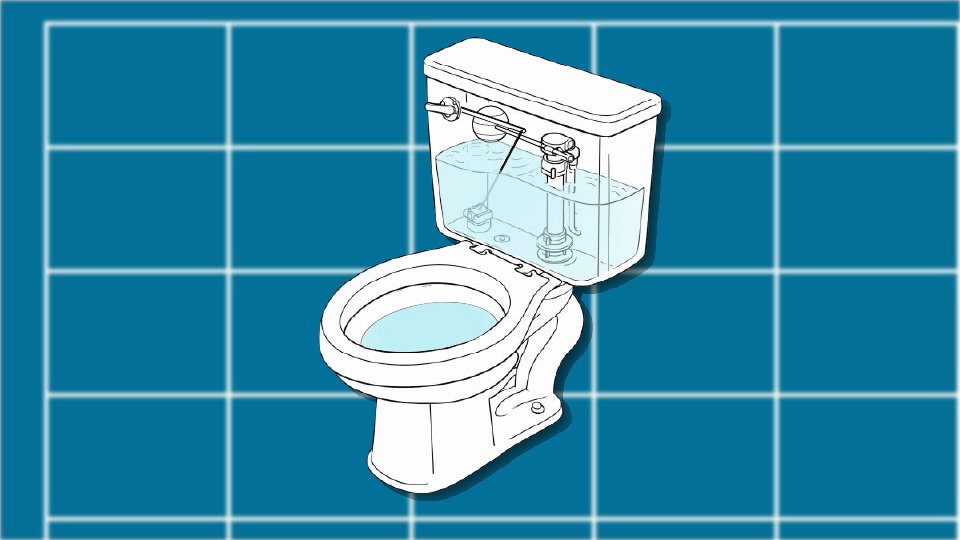
Pushing the handle down rotates a trip lever (the arm inside the tank connected to the handle) upward. A chain or a rigid lift arm connects that trip lever to the flapper below it. This is the entire mechanical purpose of the handle — it doesn’t touch the water at all. It just lifts one part.
🔓 The Flapper Opens the Flush Valve
The flapper (the rubber or plastic seal that sits over the flush valve opening at the bottom of the tank) is lifted away from the flush valve seat the moment the trip lever raises it. This opens a direct path for the entire tank of water to drop into the bowl at once — unlike a dual-flush valve, a standard flapper doesn’t have a partial-open position. It’s either sealed or it’s open, which is why standard toilets only have the one flush volume to offer.
🌊 The Rush of Water Creates the Siphon
As water drops from the tank into the bowl, it fills the bowl fast enough to trigger siphon action (the suction effect created by a rush of water that pulls waste, water, and air through the trap and into the drain line). This siphon is the actual cleaning mechanism — it’s not gravity alone pushing waste out, it’s the rapid water flow creating enough suction through the trap to pull everything through. Once the tank empties enough that the flow slows down, the siphon breaks, air enters the trap, and the bowl refills to its normal resting water level.
⚖️ The Flapper Reseats Itself
As the tank drains, the flapper — buoyant on its own, or attached to a float that rises and falls with the water — settles back down and reseals the flush valve opening once the tank is nearly empty. If a flapper is warped, cracked, or simply the wrong size for the flush valve seat, it won’t reseat cleanly, and water leaks slowly past it into the bowl. That slow leak is the single most common reason a toilet refills every so often on its own, and it’s usually a five-dollar part.
🔄 The Fill Valve Refills the Tank
Once the flapper reseals, a fill valve (the mechanism that refills the tank with water after a flush) opens and starts refilling the tank. A float on the fill valve rises with the water level and shuts the valve off once the tank reaches the height set by the fill valve’s adjustment. Some of the incoming water is also routed through a small refill tube into the overflow tube (the open tube inside the tank that prevents overfilling by draining excess water into the bowl), which restores the bowl’s resting water level at the same time the tank refills.
🔧 Reading the Failure Points
- Handle feels loose or doesn’t lift anything: the chain connecting the trip lever to the flapper has slipped off or has too much slack.
- Toilet runs constantly: check the flapper seal first, the fill valve shutoff second.
- Weak flush that doesn’t fully clear the bowl: often a flapper that closes too early, cutting the siphon off before it finishes its job — sometimes fixable by adjusting the chain length so the flapper stays open a beat longer.
🛒 Gear Worth Having
Fluidmaster 5403 Universal Toilet Flapper — Adjustable frame fits most standard flush valve seats without needing the exact original brand, which matters since most toilets outlive their box and instructions by a decade.
Korky 528 Universal Toilet Fill Valve — A direct swap when the tank refills too slowly, too loudly, or won’t shut off — adjustable height covers most standard tank sizes without measuring first.
OXO Good Grips Toilet Plunger with Holder — Comes with a stand that actually contains the drips, which matters more than the plunger itself once you know what’s involved in the alternative.
As an Amazon affiliate, I earn from qualifying purchases. Thank you for supporting SkippityWhistles.
📖 Related Reads
- Dual-Flush Toilets Explained: How the Buttons Operate
- Water Supply 101: Pipes, Valves, and Flow
- Understanding P-Traps and S-Traps
SkippityWhistles is part of the WhistleBump group – find the rest of the family at WhistleBump.com.
3013
©2026 John D Reinhart/Skippitywhistles.com — All rights reserved