
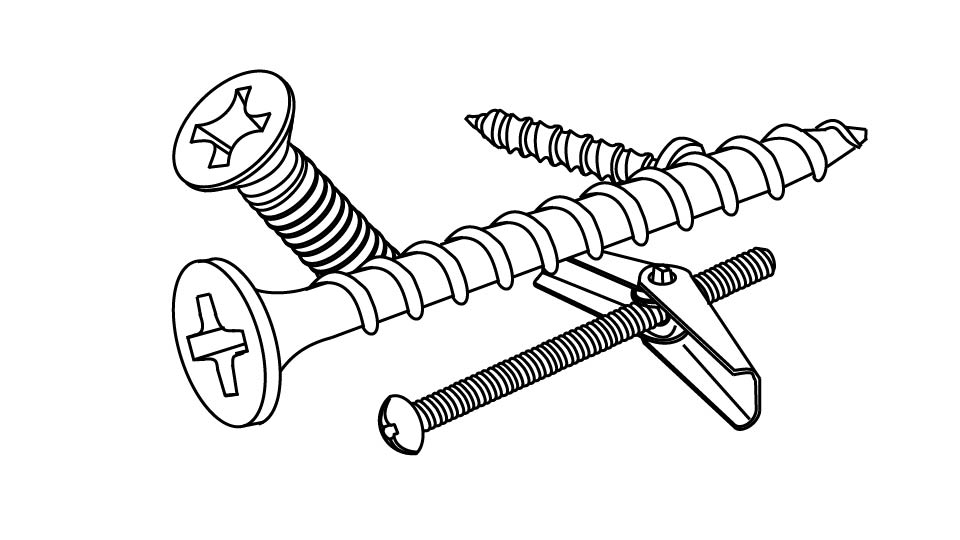
Fasteners are small, cheap, and easy to overlook—right up until the moment something fails. A shelf pulls out of the wall. A deck board loosens. A project that looked finished suddenly isn’t.
Most DIY problems aren’t caused by bad tools or bad technique. They’re caused by using the wrong fastener for the job.
This guide walks through how to choose the right fastener based on material, load, environment, and application, so your work stays put—quietly and reliably.
What Is a Fastener?
A fastener is any hardware used to mechanically join two or more materials together. Common fasteners include:
- Staples
- Screws
- Nails
- Bolts
- Anchors
- Nuts and washers
Each type exists for a reason. Choosing the right one isn’t about strength alone—it’s about compatibility.
Step 1: What Are You Fastening Into?
This is the most important question to answer first.
Wood (lumber, plywood, trim)
Wood accepts fasteners easily, but density matters. Its tough, fibrous nature means that wood hold firmly holds screws in place.
Best options:
- Wood screws – designed for joining wood to wood, these typically have a smooth shank near the head (so the top piece pulls tight), coarse threads, and a flat or rounded head.
- Deck screws – A tougher, outdoor-ready cousin of the wood screw., these are made with corrosion-resistant coatings or stainless steel, aggressive threads, and often a self-drilling or cutting tip. Designed to handle pressure-treated lumber, moisture, and temperature swings.
- Structural screws (for heavy loads) – These screws are made to actually hold structural weight safely, unlike standard wood or deck screws, which are mainly for general fastening.
Avoid drywall screws—they’re brittle and snap under stress.
This highly-rated Interior Wood Screw Assortment has a nice selection of screws you might need.
(As an Amazon affiliate, I earn from qualifying purchases)
Drywall
Because it’s made from compressed gypsum wedged between sheets of paper, drywall has almost no holding strength by itself. Without some kind of anchor, screws will simply pull out of it.
Best options:
- Plastic expansion anchors
- Toggle bolts
- Self-drilling drywall anchors
Take a look at How to Use Toggle Bolts and Anchors for more details on these handy little helpers.
Whenever possible, fasten into a stud instead. The drywall is almost always fastened to the wooden stud framing of the room. If you can drive a screw through the drywall into that stud, the strength of the wood will hold the screw.
This highly-rated Drywall Anchor and Screw kit contains most of the common drywall anchor.
In case you were wondering, this inexpensive, highly-rated Magnetic Stud Finder can become and essential tool. It looks through the drywall for nails driven into wooden studs.
Concrete, Brick, or Block
Masonry requires hardened fasteners and pilot holes.
Best options:
- Concrete screws
- Sleeve anchors
- Wedge anchors
Always use a masonry drill bit.
Take a look at How to Drive a Screw into Concrete for details on working with concrete and masonry.
Metal
Metal thickness determines your approach.
Best options:
- Sheet metal screws
- Self-tapping screws – Cuts its own threads as it’s driven into material (usually metal or plastic). Often needs a pilot hole, but no tapping.
- Machine screws with nuts
For thin metal, self-drilling screws save time.
Drilling into Sheet Metal: Quick Tips
Sometimes you need to fasten directly into sheet metal — whether for brackets, small enclosures, or DIY projects. Here are a few quick, safe tips:
- Use the right drill bit – a high-speed steel (HSS) or cobalt drill bit work best for thin metal sheets.
- Mark your spot – use a permanent marker to identify where you want the hole. Use a mallet and a center punch, or a hammer and Phillips screwdriver, to make a dimple at the spot marked. This will help prevent the bit from slipping.
- Go slowly – metal heats up quickly; moderate speed reduces friction and protects the bit.
- Lubricate if needed – a drop of cutting oil keeps the drill bit cool and extends its life.
- Check thickness – thin sheets can deform; clamp a piece of wood underneath the sheet to support if you can.
Upholstered furniture or soft materials (fabric, webbing, thin frames, etc.)
- Staples – Not from a household stapler, but from a staple gun.
Staples are shorter than screws, so there’s no danger of them poking through the other side (if you’ve sat on a chair that’s been reupholstered with screws, you will appreciate this point). Also, the upholstery doesn’t require the structure strength provided by screws. And, because fabric is often replaced, it’s quite common to pry up old staples to remove the old fabric and staple the new in place.
Step 2: How Much Load Will the Fastener Carry?
Fasteners fail in two ways: pull-out and shear.
- Pull-out load: weight pulling straight away from the surface. The fastener literally falls out of the wall, often taking some of the wall with it.
- Shear load: weight pushing sideways across the fastener. The fastener snaps off where it enters the wall, leaving a portion of itself still stuck in it.
Examples:
- A shelf bracket = pull-out + shear
- A deck ledger = heavy shear
- A wall hook = pull-out
Heavier loads usually require:
- Larger diameter fasteners
- Deeper embedment
- Anchors instead of plain screws
When in doubt, oversize slightly. Although it seldom matters if the anchor is too robust, but it will always matter if it’s too light.
Step 3: Is the Fastener Used Indoors or Outdoors?
Environment matters more than people think.
Indoor, Dry Locations
Standard zinc-plated fasteners are usually fine.
Outdoor or Damp Locations
Use corrosion-resistant fasteners:
- Galvanized
- Ceramic-coated
- Stainless steel
Never mix treated lumber with non-rated fasteners—corrosion will win.
This highly-rated Exterior Wood Screw Assortment is right in line with outdoor DIY projects.
Step 4: Is Your Project Permanent or Removable?
Some projects need flexibility.
- Permanent: nails, structural screws, wedge anchors
- Removable: screws, machine bolts, concrete screws
If future access matters, choose fasteners you can back out cleanly without damaging the material.
Step 5: Choosing the Right Size Fastener
Two dimensions matter most:
- Diameter (thickness): affects strength
- Length: affects holding power
General rule:
The fastener should penetrate the base material at least 1 to 1½ inches (more for heavy loads).
Too short = weak hold
Too long = risk of punching through the other side of the material and driving into something else, like a conduit.
Common Fastener Types (Quick Reference)
Screws
Best all-around fastener for most DIY projects.
- Strong
- Removable
- Precise
Nails
Best for framing and speed.
- Fast
- Flexible
- Not removable
Bolts
Best for high-load connections.
- Extremely strong
- Require access to both sides
See our post Understanding Nuts and Bolts for more detailed information.
Anchors
Used when the base material can’t hold threads.
- Drywall
- Concrete
- Masonry
See our post How to Use Toggle Bolts and Anchors for more detailed information.
A Word on Cheap Fasteners
Low-quality fasteners strip easily, snap under load, and waste your time. This is one area where buying decent hardware actually saves money.
If a box feels suspiciously light for its size… it’s either half-empty or filled with half-hearted fasteners.
Final Thoughts
Choosing the right fastener isn’t complicated—but it is deliberate. Match the fastener to the material, the load, and the environment, and most DIY problems simply never happen.
Do that, and your projects won’t just look finished—they’ll stay finished.
Related Posts
DIY projects involve risk. Always follow manufacturer instructions and use appropriate safety precautions.
2002
 Skippity Whistles