
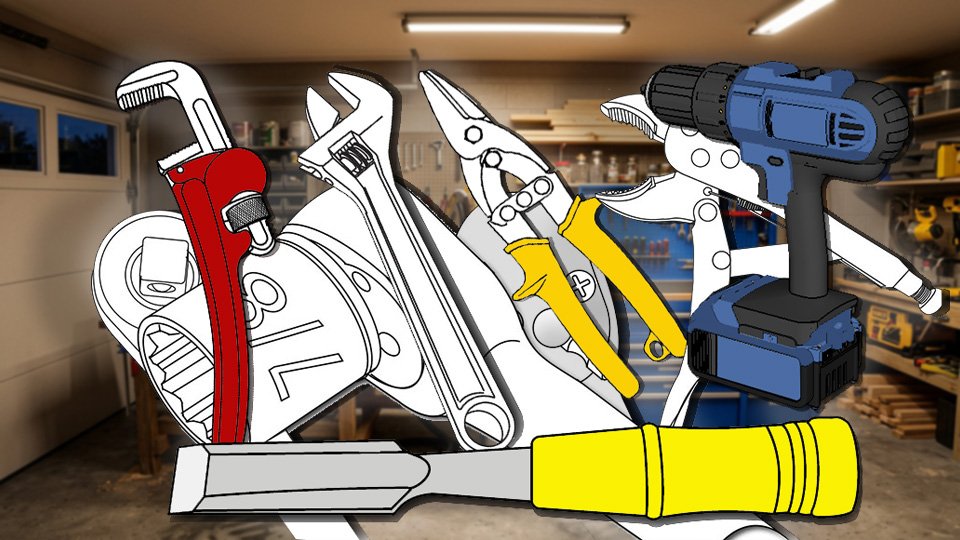
Rhonda stood in the tool aisle at the hardware store, surrounded by a wall of options she couldn’t name and didn’t know if she needed, and left with nothing because buying the wrong thing felt worse than buying nothing at all. That’s a completely reasonable place to freeze. The tool aisle is built to look like you need all of it at once. You don’t.
A toolbox isn’t something you buy in one trip. It’s something you build, one real project at a time, until one day you realize you already own exactly what the next job calls for.
📏 Measuring and Marking: Where Every Project Starts
- A 25-foot tape measure is the one tool you’ll reach for more than any other — cheap, durable, and essential from the very first project.
- A pencil or carpenter’s pencil marks cut lines and placement points, and costs next to nothing.
- A 2- to 4-foot level tells you honestly whether something is straight, which your eye is genuinely bad at judging on its own.
- A speed square or carpenter’s square keeps corners at true 90 degrees and helps mark straight lines.
None of this is exciting. All of it prevents the kind of mistake that only shows up after the cut’s already made.
✂️ Cutting Tools: Sharp and Safe
- A handsaw handles straight cuts in lumber with zero batteries required.
- A utility knife might be the single most-used tool in the whole box. From scoring drywall and opening boxes to cutting nearly anything thin, the blades are cheap enough to replace regularly.
- A hacksaw earns its keep the day you need to cut metal pipe or hardware, which isn’t every project, but is worth owning ahead of that day.
Whatever the tool, the same rule applies: cut away from your body, always.
🔧 Driving Tools: Fastening and Assembly
- A multi-bit screwdriver set covers flathead and Phillips in one compact tool, and matching bit size to screw size prevents the single most common cause of a stripped screw head.
- A 16-ounce hammer handles nails, taps anchors into place, and does light demolition — let its weight do the work rather than swinging from the shoulder.
- A cordless power drill is the one tool on this entire list worth buying earlier rather than later; it drives screws faster than any manual driver and turns tedious work into quick work on almost every project that follows.
An impact driver and a dedicated drywall screwgun are both genuinely useful upgrades, but neither is essential until a specific project calls for it.
🗜️ Holding Things Steady
- A pair of bar clamps frees up both hands for cutting, fastening, or gluing, and gets used more than most people expect once they own a set.
- Two sawhorses turn any flat door or sheet of plywood into a stable elevated workspace — one of the better investments in this entire list.
- An adjustable wrench does the job of a whole set of fixed wrenches until specific jobs demand otherwise.
- A basic pair of slip-joint pliers covers general gripping, twisting, and holding for nearly everything a beginner toolkit needs. More specialized pliers can be added only once a project specifically calls for them.
🎨 Finishing Tools: Where Good Becomes Great
- An assortment of sandpaper or a sanding block smooths rough edges and makes a project look intentional instead of hasty.
- A basic brush and roller combo handles most painting and finishing work, and spending a little more on quality bristles shows up directly in the final result.
- A caulk gun keeps sealant application clean and controlled instead of squeezed straight from the tube by hand.
None of these tools are complicated — they’re just the difference between a project that’s technically finished and one that actually looks finished.
⚡ Electrical and Testing: Stay Safe
- A non-contact voltage tester is the one tool worth owning before touching any electrical work at all. Hold it near a wire and it tells you honestly whether that wire is live.
- A multimeter goes a step further, testing voltage, continuity, and more, and is worth adding once basic electrical work becomes a regular occurrence rather than a one-time job.
- Wire strippers matter the moment any low-voltage work is on the table.
None of this replaces real caution — anything beyond simple, well-understood work is worth a licensed electrician, every time.
🛡️ Safety Gear: Not Optional
- Work gloves protect hands from cuts and splinters on nearly every project.
- Safety glasses guard against flying debris the instant you’re cutting, sanding, or drilling — keep them within reach and actually use them.
- A dust mask or respirator matters most for drywall, sanding, and insulation work, where fine particles are genuinely bad to breathe.
- Hearing protection around power tools prevents damage that doesn’t heal once it’s done.
None of this is about being overly cautious. It’s about still having full use of your hands, eyes, lungs, and hearing for the next fifty projects, not just this one.
🧠 The Real Point of All This
Owning the right tool for a job changes how a project feels, not just how it goes. Fighting the wrong tool is frustrating in a way that has nothing to do with skill. Reaching for the right one, because you already own it, is confidence you can feel in your hands before the project even starts. That confidence is the actual payoff here — not a fully stocked garage, just one project at a time, built on tools that were worth having when you needed them.
🛒 Gear Worth Having
Amazon Basics 178-Piece Home Repair Tool Kit — Covers the measuring, driving, and holding basics in one box, which solves the very real problem of not knowing where to start.
DEWALT 20V MAX Cordless Drill/Driver — The single tool on this list most worth buying early — it changes more projects from tedious to easy than anything else here.
AXEMIS Half-Face Respirator Mask Combo Kit with Anti-Fog Safety Glasses & Earplugs — Covers eyes, lungs, and ears in one kit, which is the actual protection combo that exists as a real product — gloves are worth adding separately if a project calls for them.
As an Amazon affiliate, I earn from qualifying purchases. Thank you for supporting SkippityWhistles.
📖 Related Reads
SkippityWhistles is part of the WhistleBump group – find the rest of the family at WhistleBump.com.
7020
©2026 John D Reinhart/Skippitywhistles.com — All rights reserved