How to Use Slip-Joint Pliers (Or: The Pliers in Your Kitchen Drawer Actually Have a Name)

Slip-joint pliers grip almost anything, which is exactly why they’re the wrong tool for turning a bolt. Here’s what they’re actually for.

Ron reached for his slip-joint pliers to loosen a stubborn bolt, since they were closer than the toolbox with his wrenches in it. The pliers gripped fine. They also slipped twice under real torque, and by the third try, the bolt’s corners were rounded smooth enough that no tool was turning it cleanly anymore. The bolt muttered “jeez, Ron. What’d I do to you?”

A slip-joint pliers is the pliers most households already own without knowing the name — the classic shape sitting in a kitchen drawer or a junk drawer somewhere. It’s genuinely useful. It’s just not built to replace a wrench, and knowing where that line sits is the whole skill.

🤏 What Makes Them Special

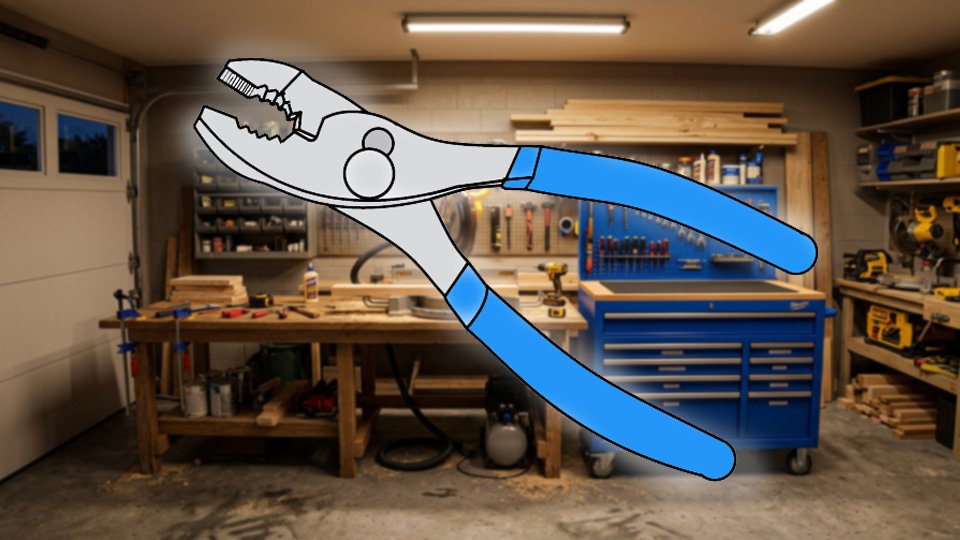
The defining feature is the pivot point — the hinge where the two halves cross. On a slip-joint pliers, that pivot can slide into a second position, widening the gap the jaws can open to.

That’s the entire trick behind the name. One tool, two jaw ranges, covering both small objects and noticeably larger ones without switching pliers.

🎚️ Adjusting the Jaw Width

Open the handles wide. At full extension, you’ll feel the pivot reach a point where it can slide.

Slide the pivot into the other slot to change the jaw range — wider for bigger objects, narrower for smaller ones.

Close the jaws partway and test the fit against whatever you’re about to grip before committing to a full squeeze.

✋ Gripping and Holding

Set the jaw width to match the object first. Then squeeze firm enough to hold it steady, not hard enough to crush it.

This is the tool’s actual home turf — holding a loose nut steady, gripping a bent nail, keeping a small part from sliding while you work on it with your other hand.

〰️ Bending and Shaping Wire

The serrated jaws grip light-gauge wire well enough to bend it into a shape and hold that shape while you work. This is genuinely reliable for craft wire, picture-hanging wire, and similarly light material.

It’s not the tool for anything heavier. Thick wire or metal rod needs a tool built for real leverage, not a pair of general-purpose pliers.

✂️ Light Cutting, If Equipped

Some slip-joint pliers include a small cutting notch near the pivot, meant for thin wire and soft metal only.

Position the material perpendicular to the cutting edge before squeezing. Wear safety glasses — a cut wire end can flick unpredictably.

This cutting notch is not a substitute for actual wire cutters on anything beyond light-gauge material.

🚫 What They’re Not Built For

Fasteners are the big one. Slip-joint pliers can loosen or turn a nut in a pinch, but the adjustable jaw is imprecise by nature and slips under real torque — which is exactly how a bolt’s corners get rounded off, sometimes badly enough that no tool can grip it cleanly afterward.

A wrench is built for that job. Reach for that.

Finished surfaces are the other one. The serrated jaws that grip so reliably will also mark chrome, painted metal, or anything else with a finish worth protecting. A folded cloth between the jaws and the object solves this without giving up any real grip.`

🛡️ Safety Basics

Wear eye protection any time you’re cutting or twisting wire.

Grip with control rather than force — if something genuinely won’t budge, that’s the signal to switch tools, not to squeeze harder.

And never use any pliers on a live electrical circuit; confirm power is off first, every time.

🛒 Gear Worth Having

IRWIN VISE-GRIP Slip-Joint Pliers, 6.5-Inch — A compact size that covers the everyday gripping and holding jobs this tool was actually built for.

CHANNELLOCK Slip-Joint Pliers, 8-Inch — A larger size for bigger objects, worth having alongside the smaller pair rather than instead of it.

Microfiber Cloth Multi-Pack — A folded layer between the jaws and a finished surface, so a good grip doesn’t come at the cost of a scratched fixture.

As an Amazon affiliate, I earn from qualifying purchases. Thank you for supporting SkippityWhistles.

📖 Related Reads


SkippityWhistles is part of the WhistleBump group – find the rest of the family at WhistleBump.com.

7022

©2026 John D Reinhart/Skippitywhistles.com — All rights reserved
How to Choose and Use Pliers (Or: The Tool That Does More Than You Think)

Most drawers have one mystery pair of pliers doing every job badly. Here’s what the different types actually do, and which one to reach for.

Ron owns exactly one pair of pliers, and he genuinely doesn’t know what kind they are. He’s used them to grip, to twist, and once, memorably, to cut a wire — which mostly just crushed the wire flat and left him bending it back and forth until it snapped on its own. The pliers weren’t broken. They just weren’t built for cutting, and nothing about how they looked told Ron that.

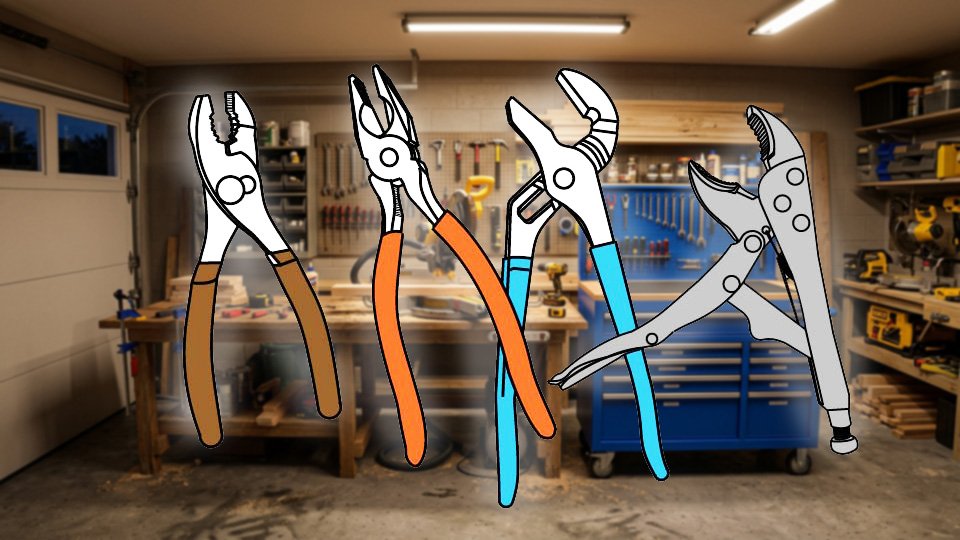
Pliers aren’t one tool. They’re a small family of tools that all look vaguely similar and do genuinely different jobs. Knowing which one you’re holding — and which one a task actually calls for — is most of the battle.

🤏 Slip-Joint Pliers: The Everyday Starter

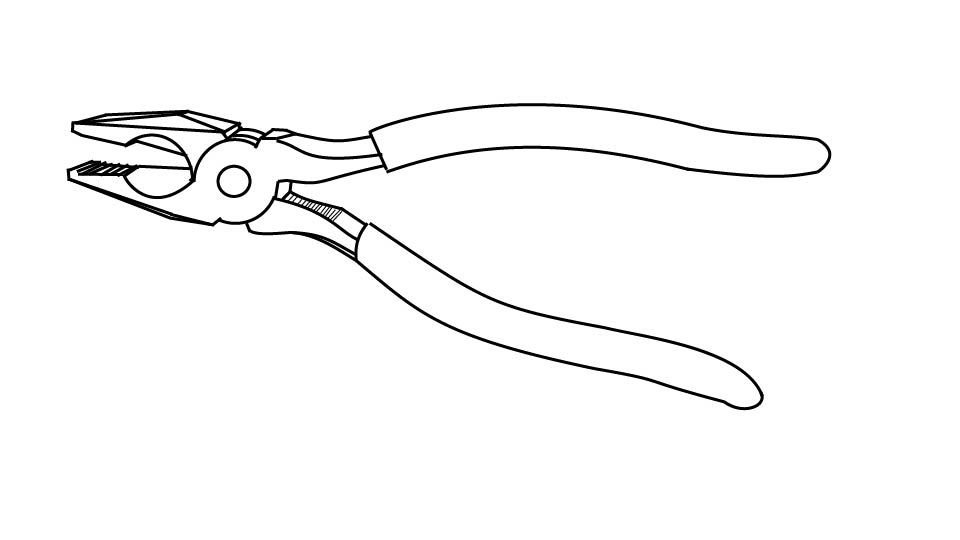
a Line drawing of slip-joint pliers by John D Reinhart

A slip-joint pliers (the classic pliers shape, with a pivot point that slides to widen or narrow the jaw opening) is the one pair most households already own without necessarily knowing its name.

That adjustable pivot is the whole trick — narrow it for small objects, widen it for bigger ones, all from one tool. It handles general gripping, holding, light bending, and gentle nail-pulling well, and covers a genuinely large share of everyday DIY tasks. It’s not built for cutting wire cleanly or gripping something round and stubborn — those jobs belong to other pliers on this list.

✂️ Linesman Pliers: Built to Cut and Twist Wire

A line drawing of linesman pliers by John D Reinhart

A linesman pliers (a heavier-duty pliers with a built-in wire cutter machined right into the jaws) exists specifically for the job slip-joint pliers can’t do well.

The cutting edge bites through wire cleanly instead of crushing it flat, and the shorter, thicker handles give real leverage and control. Electricians reach for these constantly, for exactly that reason.

Always confirm power is off before using any pliers on an electrical task — that rule doesn’t bend for a “small” job.

🔩 Channel-Lock Pliers: Wide Grip for Plumbing and Big Fasteners

A line drawing of channel-lock-style pliers by John D Reinhart

A channel-lock pliers, also called groove-joint pliers (a wider, heavier pliers whose pivot slides along a grooved channel for a much larger adjustment range than slip-joint), opens far wider than a slip-joint pair ever can.

That extra range is what lets it grip pipes, large nuts, and irregular shapes that a slip-joint pliers simply can’t reach around. Adjust the jaw to the object before gripping — a loose fit here either damages the fastener or lets the tool slip under load.

🔒 Locking Pliers: Hands-Free Holding

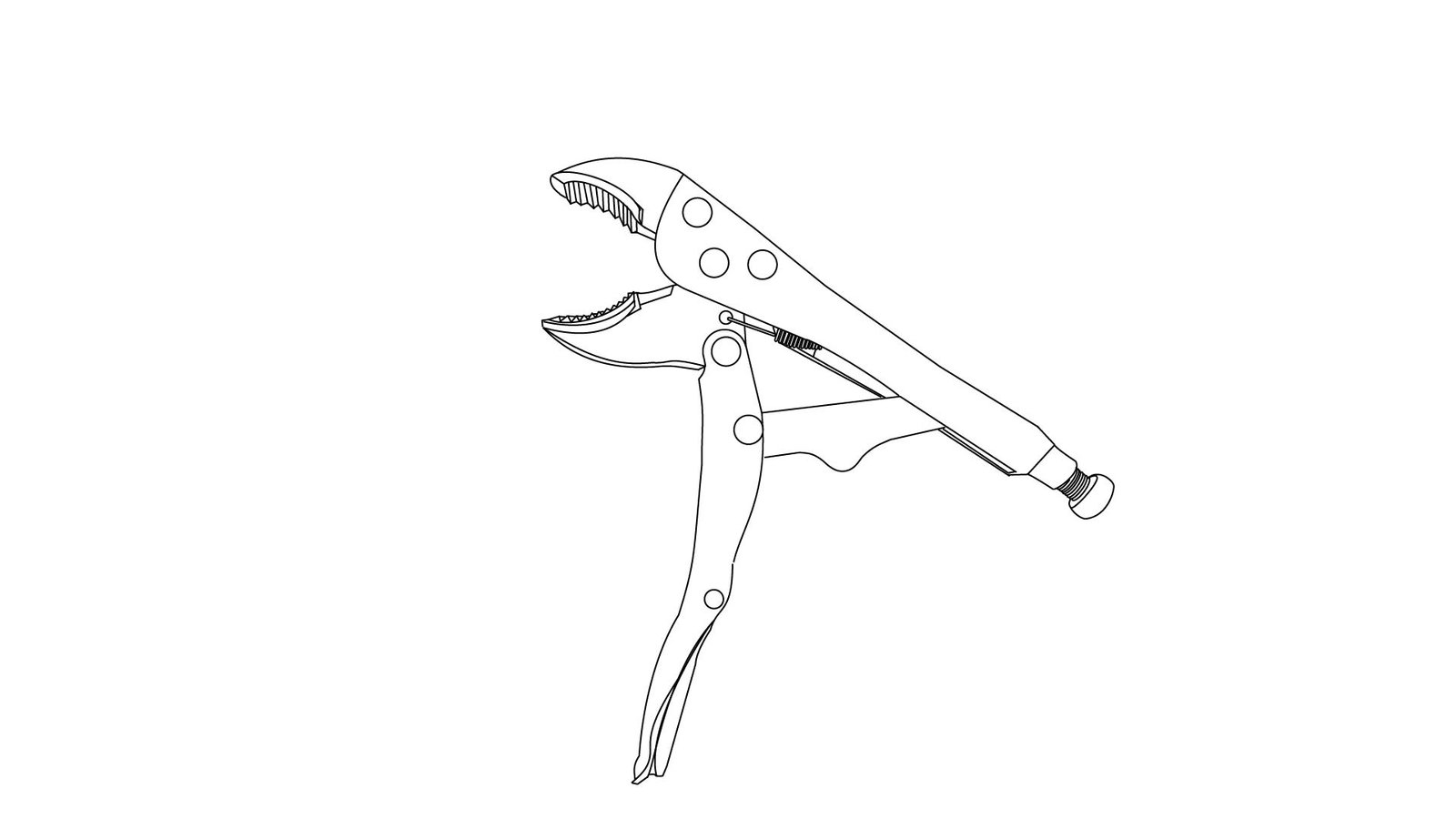
A line drawing of an open pair of locking pliers by John D Reinhart

A locking pliers, often called vise-grips (a pliers with a toggle mechanism that locks the jaws clamped shut without needing continuous hand pressure), solves a problem none of the others do — staying clamped on its own once locked, freeing both hands for the actual work.

The full mechanism, adjustment, and release technique gets a complete walkthrough in the dedicated locking pliers post, since that’s genuinely a different skill worth its own space rather than a paragraph here.

🧰 The Rest of the Family, Briefly

  • A needle-nose pliers reaches into tight spaces and handles small, precise objects a standard jaw can’t get near.
  • A diagonal cutting pliers, sometimes called dikes, gives a cleaner wire cut than a linesman pliers can manage in certain spots.
  • Specialty pliers — crimping, adjustable, and beyond — exist for specific jobs you’ll recognize the moment you actually need them.

None of these are worth buying ahead of a project that calls for them specifically.

🛡️ Safety Basics

Wear safety glasses whenever cutting or twisting — flying bits of wire and metal are a real risk. Match the pliers to the job; forcing a slip-joint pair to turn a bolt built for channel-locks usually damages the tool, the fastener, or both. Never grip a wire without first confirming the power is off, gloves or no gloves. Keep pliers clean and free of rust, since a slipping tool is far more often a dirty or corroded one than a broken one.

🎯 Building the Set: What to Buy First

  • A single pair of slip-joint pliers covers most early projects and is the right first purchase for almost anyone.
  • Add linesman pliers the moment any electrical work enters the picture — the ability to cut and twist wire safely is worth having before it’s needed.
  • Add channel-locks once plumbing or larger fasteners show up in a project.

That three-tool combination covers the overwhelming majority of home DIY without needing a full wall of specialty pliers.

🛒 Gear Worth Having

IRWIN VISE-GRIP Slip-Joint Pliers — The right first pair for almost anyone — versatile enough to cover most early projects before anything more specialized is needed.

Klein Tools Linesman Pliers — A genuine wire-cutting edge machined into the jaws, worth owning the moment any electrical task enters a project.

CHANNELLOCK Straight Jaw Tongue-and-Groove Pliers — The wide-range grip that handles pipe and oversized fasteners a slip-joint pair was never built to reach around.

As an Amazon affiliate, I earn from qualifying purchases. Thank you for supporting SkippityWhistles.

📖 Related Reads


SkippityWhistles is part of the WhistleBump group – find the rest of the family at WhistleBump.com.

7021

©2026 John D Reinhart/Skippitywhistles.com — All rights reserved