Most people who own a pair of aviation shears own one pair. They reach for them when something needs cutting, use them, put them back, and never think much about it. The cuts are fine, mostly. Sometimes the metal binds. Sometimes the edge comes out ragged. Sometimes the hand gives out before the job does.
What most people don’t know — because nobody mentioned it and the shears didn’t come with an explanation — is that aviation shears are color-coded. Red, green, and yellow. Each color cuts differently. Using the wrong color for the job is why metal binds, why edges come out rough, and why hands get tired. Using the right color makes the cut feel almost effortless.
Here’s what the colors mean, how to use the tool correctly, and why a three-piece set is almost always the right answer.
✈️ What Aviation Shears Actually Are
Aviation shears — also called tin snips, aviation snips, or compound snips — are cutting tools designed to slice cleanly through thin metal with minimal hand effort. Despite the name, they have nothing to do with aircraft in daily use. Plumbers reach for them. HVAC technicians live by them. Roofers use them constantly. Anyone who’s ever had to cut sheet metal, aluminum flashing, galvanized steel, vinyl siding, or wire mesh has either used aviation shears or wished they had.
The key engineering feature is compound leverage — a mechanism inside the tool that multiplies the force from your hand before it reaches the blades. This is why aviation shears cut through 18-gauge steel without leaving the user exhausted. The tool does most of the work. Your job is to guide it.
They are meaningfully different from old-style straight tin snips, which use simple leverage and require considerably more hand effort. If the snips in the toolbox have plain metal handles and feel like heavy scissors, those are traditional tin snips. If they have colored handles — red, green, or yellow — and feel more substantial, those are aviation shears. The upgrade is noticeable immediately.
🔴🟢🟡 The Color Code — This Is the Important Part
Aviation shears are sold in three colors, and each color designates the direction the tool is designed to cut. This is not decorative. It is functional information, and using the wrong color produces worse cuts with more effort.
🔴Red-handled shears cut to the left. When you’re cutting a curve that turns counterclockwise — or when you want the waste material to curl away to the left — red is the pair to reach for. The blade geometry is offset so that cutting pressure naturally follows a leftward arc.
🟢Green-handled shears cut to the right. Clockwise curves, right-turning arcs, situations where the waste needs to curl right — that’s green. The blade offset works in the opposite direction from red.
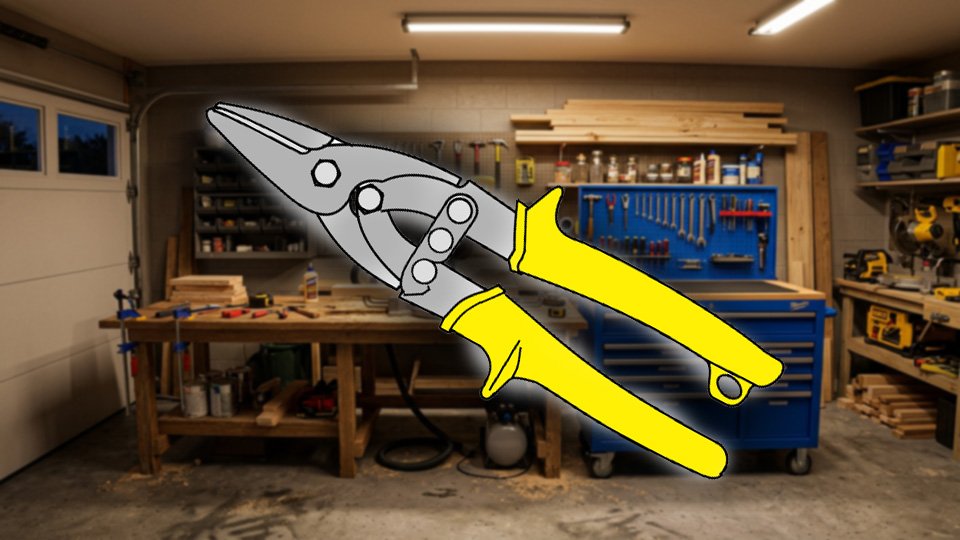
🟡Yellow-handled shears cut straight. They’re designed for long straight lines and wide, gentle curves in either direction. Yellow handles most of the routine cutting jobs — trimming a piece of flashing to length, cutting a straight edge on sheet metal, making the initial entry cut before switching to red or green for curves.
The practical implication: for a straight cut, reach for yellow. For a curve turning left, reach for red. For a curve turning right, reach for green. Using green for a left-turning curve causes the metal to bind against the blade, the cut gets ragged, and the hand has to work much harder than it should. The right pair makes the cut follow the line naturally, the waste curls away cleanly, and the edge comes out smooth.
This is why a three-piece set is the right purchase. Any serious sheet metal job involves a mix of straight cuts and curves in both directions. Having all three colors means always having the right tool for the next cut.
📐 How to Actually Use Them
Mark the cut line clearly before starting. A permanent marker works on most metals. A scribe — a pointed tool that scratches a line into the metal surface — works better on shiny or coated surfaces where marker can smear. Aviation shears follow lines accurately, but only if the line is visible throughout the cut.
Select the correct color for the cut direction. This step takes two seconds and makes the entire job go better.
Cut in short bites rather than trying to push the full blade length through the metal at once. Open the shears, advance them a few inches along the cut line, close them. Open, advance, close. Short, controlled strokes give more accuracy, produce cleaner edges, and generate far less hand fatigue than long forcing cuts. If the hand is getting tired, the bites are probably too long.
Let the waste piece curl naturally. Aviation shears are designed so the waste material curls away from the cut as you work — usually upward and to the side, depending on which color you’re using. Don’t fight this. Don’t try to hold the waste flat. Let it curl. Fighting the curl is what causes binding and rough edges.
Keep the wrist neutral. Aviation shears are engineered to do the cutting — the compound leverage mechanism handles the hard part. If the wrist is straining or the hand is aching after a short cut, something is wrong: either the wrong color shears are in use, the material is too thick for the tool, or the blades need sharpening or replacement.
⚠️ The Edges Are Sharp — This Is Not a Metaphor
Cut sheet metal has edges that are genuinely dangerous. A freshly cut edge of aluminum flashing or galvanized steel is sharp enough to cut skin easily, and the cut happens before you feel it coming. Work gloves are not optional for sheet metal work. Heavy leather or cut-resistant gloves are better than thin ones for this job specifically.
Store aviation shears with the safety latch engaged. Every pair has a small latch that locks the blades closed. It exists so the tool doesn’t open accidentally in a toolbox and cut whatever else is in there — or the hand reaching into it. Engage it every time. It takes one second.
🔍 What Aviation Shears Can and Can’t Cut
Most quality aviation shears handle up to 18-gauge mild steel and up to 22-gauge stainless steel (higher gauge numbers mean thinner material — and since stainless is harder than mild steel, the shears reach their limit at a thinner gauge). They also cut aluminum flashing, copper sheet, vinyl siding, wire mesh, and thin plastics cleanly. These are the materials they were designed for.
What they’re not designed for: hardened steel, rods, wire rope, or anything substantially thicker than 18-gauge mild steel. Using aviation shears on material that exceeds their rating damages the blades — the cutting edge rolls or chips — and the shears won’t cut cleanly afterward. When the material seems too tough for the shears, it probably is. The right tool for heavy material is a different tool.
🛠️ Keeping Them in Good Condition
Wipe the blades dry after use. Metal shavings and moisture accelerate rust on the blade edges. A dry cloth takes ten seconds and extends the life of the tool significantly.
A drop of oil on the pivot joint occasionally keeps the compound mechanism moving smoothly. Any light machine oil works. The pivot is where the compound leverage operates — keeping it lubricated keeps the cutting effort low.
Store with the safety latch engaged, in a dry location. Aviation shears left loose in a wet environment rust quickly. A tool roll, a dedicated drawer, or a hook on the pegboard all work fine. Just not loose in a damp garage.
🛒 Gear Worth Having
HURRICANE 3-Piece Aviation Tin Snips Set — 10″, Cr-V Steel, Red/Green/Yellow — All three cutting directions in one purchase, which is the right way to buy aviation shears. Chrome vanadium steel blades with micro-serrations that grip metal rather than skating off it. Non-slip rubber grips reduce hand fatigue on longer jobs. Safety latch on each pair. Cuts up to 20-gauge cold-rolled steel and 22-gauge stainless. The complete answer for anyone who cuts sheet metal at home more than occasionally.
MIDWEST Aviation Snip Set — Left & Right Cut, Forged Blade, KUSH’N-POWER Grips (MWT-6510C) — The professional-grade pair. Forged blades rather than stamped, which holds a sharper edge longer under heavy use. The KUSH’N-POWER grip is genuinely comfortable for extended cutting sessions. MIDWEST is the brand that HVAC technicians and sheet metal workers reach for on the job. Includes left and right cut — pair with a yellow-handle straight snip for the complete set.
Klein Tools 2402S Straight-Cutting Aviation Tin Snips — Forged Blade, Offset Design — For the toolbox that needs one reliable straight-cut snip and nothing more. Offset blade design keeps knuckles clear of the work surface. Forged blade from Klein, who has been making professional hand tools since 1857. The single-snip option for trim work, flashing, and straight-line jobs where left and right curves aren’t part of the project.
As an Amazon affiliate, I earn from qualifying purchases. Thank you for supporting SkippityWhistles.
📖 Related Reads
Once the color code clicks, aviation shears stop being the tool that sort-of works and start being the tool that gets reached for first. The right pair for the right cut, waste curling cleanly away, edge coming out smooth. It takes one job with all three colors to understand why one pair was never quite enough.
SkippityWhistles is part of the WhistleBump group – find the rest of the family at WhistleBump.com.
7018
©2026 John D Reinhart/Skippitywhistles.com — All rights reserved