
Learn how to choose the right wrench for any fastening task — from adjustable and pipe wrenches to socket sets. Find expert tips, wrench comparisons, and links to detailed guides on wrench types.
Introduction: Why Choosing the Right Wrench Matters
Whether you’re tightening a stubborn bolt or working on a plumbing repair, picking the correct wrench can make or break your project. Using the wrong tool not only makes the job harder — it can strip fasteners, damage parts, and cost you time (and money).
Know What You’re Trying to Do
The first question is simple: What are you trying to tighten or loosen? Different tasks require different wrench styles:
- Nuts & bolts on machinery or furniture
- Pipe fittings and plumbing
- Automotive and mechanical assemblies
- Quick adjustments and general DIY
The right wrench gives you better leverage, grip, and control.
Wrench Types and When to Use Them
Below are the most common wrench styles and their ideal uses:
Adjustable Wrenches
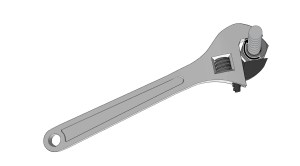
Also called a crescent wrench, these are best for when you don’t know the exact size or need one tool for multiple sizes. Not as precise as fixed-size tools but great for general use. Learn more in our detailed guide: How to Use an Adjustable Wrench.
👉 Best for: light-to-medium DIY jobs, odd sizes, quick fixes.
Pipe Wrenches
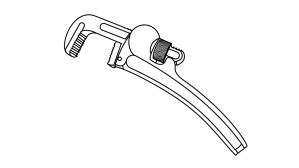
Designed specifically for pipe work, their serrated jaws bite into round surfaces, making them ideal for plumbing. These aren’t meant for nuts or bolts — they’ll mar finished surfaces if used improperly. Visit our Pipe Wrench Guide for full tips.
👉 Best for: threaded pipe connections and plumbing.
Socket Wrenches
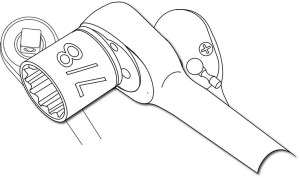
Socket wrenches use interchangeable sockets to fit many fastener sizes with a single handle plus ratchet action, making them fast and versatile. Our Socket Wrench Guide explains how to choose sockets and use ratcheting tools effectively.
👉 Best for: automotive repair, enclosed spaces, and high-torque jobs.
🔹 Other Wrench Types Worth Knowing
Other common types include:
- Spanners – Box end, open end, and combination wrenches — for precision and control of metal fasteners.
- Torque wrenches — for precise torque settings when tightening critical fasteners.
Tips for Choosing the Right Wrench
Match Size Exactly
Loose or sloppy wrenches round fastener corners and strip threads. Always choose the right-fitting wrench or socket.
Pull, Don’t Push
When possible, pull the wrench toward you — you’ll avoid slips and knuckle injuries.
Inspect and Maintain
Rusty, bent, or damaged wrenches are less effective and unsafe. Keep your tools clean and stored properly.
Safety First
Wear eye protection, avoid cheater bars (extending the handle with pipe) — they can bend tools or over-torque fasteners.
Infographic
This very simple chart connect fasteners and wrenches together, and may be helpful:
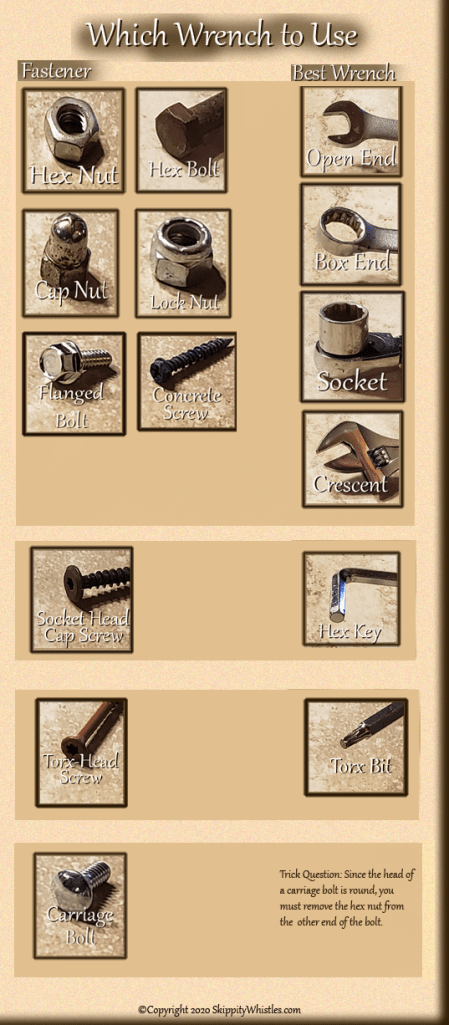
Download your own easy-to-use, portable PDF version of this graphic right here: Skippity Whistles Which Wrench Infographic! A genuine Skippity Freebie!
DIY projects involve risk. Always follow manufacturer instructions and use appropriate safety precautions.
7013
©2026 SkippityWhistles.com All right reserved
 Skippity Whistles