
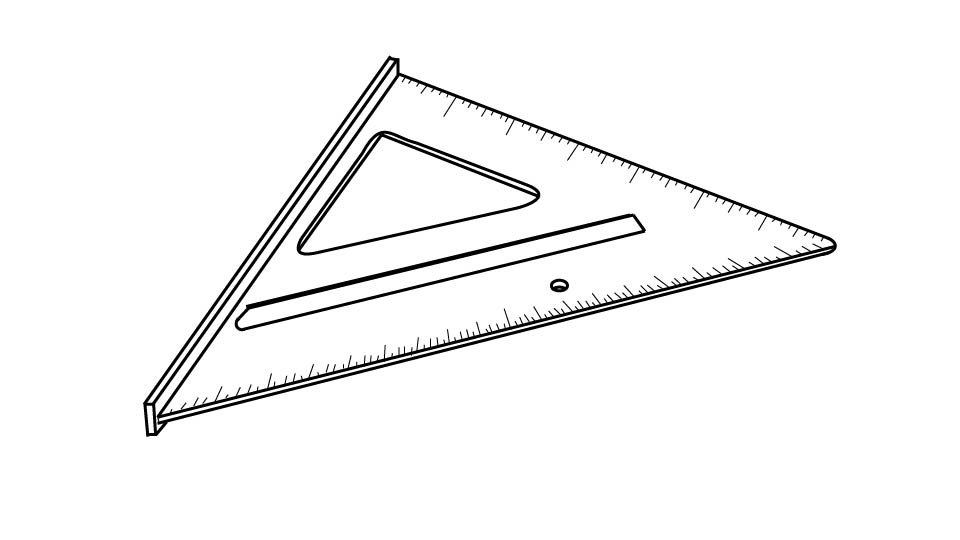
If a measuring tape tells you how long something is, a carpenter’s square tells you whether it’s straight and square. For beginners, this tool is essential for clean cuts, straight layouts, and frustration-free builds.
This guide explains what a carpenter’s square does and how to use it properly.
What Is a Carpenter’s Square?
A carpenter’s square (also called a framing square or speed square, depending on style) helps you:
- Mark straight lines
- Check 90° angles
- Lay out cuts accurately
We’ll focus on the traditional L-shaped carpenter’s square, which is perfect for beginners.
How to Use a Carpenter’s Square
Marking a Straight Line
- Place the long edge against your material
- Hold it firmly — don’t let it slide
- Draw along the short edge
This guarantees a straight, square line.
Checking for Square (90°)
- Place the inside corner of the square against the corner of your material
- Check both edges
- If both edges sit flush, it’s square
If there’s a gap — something’s off.
Transferring Measurements
You can use the square to carry measurements across boards consistently — very helpful when cutting multiple pieces the same size.
Press the square against the edge of the board you’re measuring. Make a mark on the square at the feature you want to transfer.
Press the square against the edge of the new board, and the mark shows you where to start to the feature.
Common Beginner Mistakes
- Letting the square shift while marking
- Using a damaged or bent square
- Assuming lumber is straight (it often isn’t)
Always trust the square, not the board.
Recommended Carpenter’s Squares
This Swanson 7-Inch Square is both highly rated and durable.
(As an Amazon affiliate, I earn from qualified purchases)
Why This Tool Matters
A carpenter’s square:
- Makes cuts fit better
- Reduces wasted material
- Builds confidence
It’s one of those tools that quietly makes everything else easier.
Related Posts
DIY projects involve risk. Always follow manufacturer instructions and use appropriate safety precautions..
7027
 Skippity Whistles