
Because water always waits until you’re out of towels.
There are two kinds of homeowners:
- Those who know where their main water shutoff valve is.
- Those who are about to learn.
If you are reading this calmly with a cup of coffee, congratulations.
If you are reading this while something is spraying like a decorative fountain in a Roman courtyard — we move quickly.
This is simple. You can do this.
Why You Need to Know This
Every plumbing emergency becomes two problems:
- The broken thing
- The water that will not stop coming out of the broken thing
The fastest way to turn chaos into inconvenience is to shut off the water supply to the house.
Once the water stops, you can think.
Step 1: Find the Main Shutoff Valve
There are two common places it lives:
Inside the House
Look for:
- Basement (near the front wall)
- Crawlspace
- Utility room
- Near the water heater
Follow the pipe that comes in from the street. It usually enters low on an exterior wall.
Outside the House
In warmer climates, it may be:
- Near the foundation
- In a ground box labeled “Water”
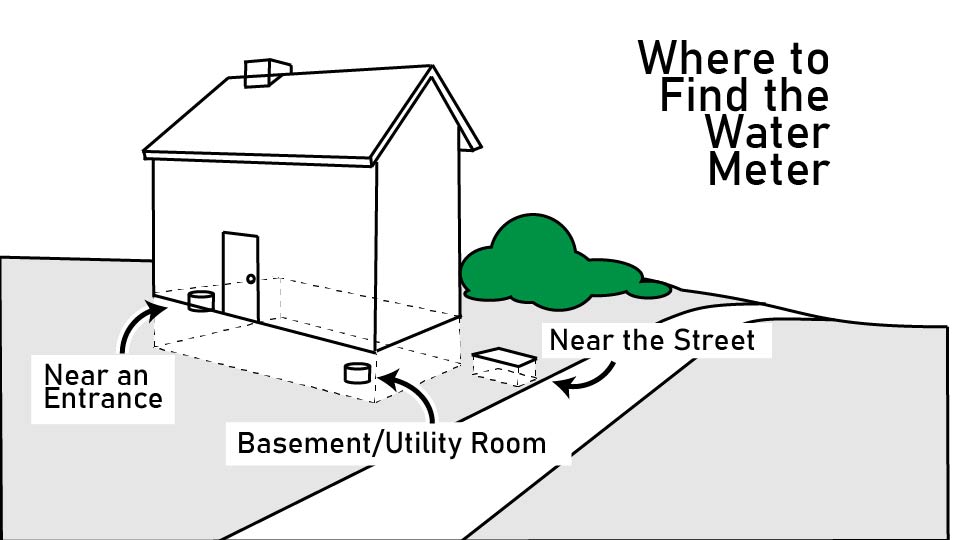
- Close to the street or sidewalk
If you see a round or rectangular concrete or metal lid in the yard — that’s a strong candidate.
Step 2: Identify the Type of Valve
You’ll usually see one of these:
Gate Valve (Round Wheel Handle)
Looks like an old-fashioned spigot handle.
Turn it clockwise (righty-tighty) until it stops.
Go gently but firmly. If it hasn’t moved in 12 years, it may resist like a teenager being asked to clean a room.
Ball Valve (Lever Handle)
Looks like a straight lever.
Turn it a quarter turn clockwise so the handle is perpendicular to the pipe.
Parallel = water flowing
Perpendicular = water stopped
These are wonderful. Clear. Decisive. No drama.
Step 3: Confirm It Worked
Turn on a sink faucet.
If water runs briefly and then slows to a stop — you did it.
If it keeps flowing confidently like nothing happened, you may have:
- Turned the wrong valve
- Only shut off a branch line
- Found a decorative relic from 1978
Try again.
If You Can’t Find It
Deep breath.
Look for:
- A water meter box near the street
- A metal or plastic lid marked “Water”
There is usually a shutoff valve on the street side of the meter. That may require:
- A meter key
- Or a wrench
If you’re unsure or it looks municipal and intimidating, call your water company. They prefer controlled shutoffs to flooded basements.
Important: Turn It Back On Slowly
When the emergency is resolved:
- Open a faucet inside the house. Nothing will happen – hello? The water’s off.
- Turn the valve back on slowly.
- Let air purge from the lines. Now the open faucet will hiss and spit as the air comes out of the pipes.
This prevents pressure shock (which is plumbing’s way of slamming doors).
Pro Tip: Do All of This Today
Not during a crisis.
Right now, or at least this weekend:
- Locate your shutoff valve
- Make sure it turns
- Clear access to it
- Show everyone in the house where it is
Future You will be deeply grateful.
The Big Idea
Shutting off your home’s water is not advanced plumbing.
It is preparedness.
And preparedness turns:
“WE HAVE A SITUATION”
into
“Hold on, I’ve got this.”
That’s the difference between panic and control.
DIY projects involve risk. Always follow manufacturer instructions and use appropriate safety precautions.
3018
 Skippity Whistles