(Or: You mean that big bend in the base isn’t there for looks?)
You look at a toilet and think:
“It’s just a bowl of water with a handle, right?”
Wrong. Wrong, wrong, wrong.
There’s a lot going on inside that porcelain bowl and tank. Understanding it isn’t just curiosity—it’s the kind of knowledge that saves frustration, prevents clogs, and makes replacement parts feel like common sense.
The Tank and the Handle
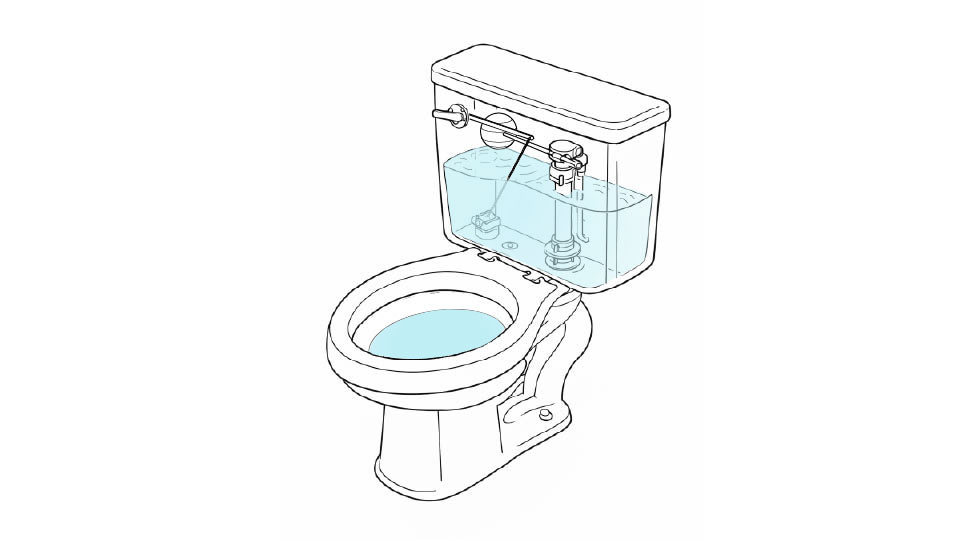
Standard toilets (a.k.a. lever-flush) operate with a simple chain reaction:
- Lift the handle →
- The chain pulls the flapper at the bottom of the tank →
- Water rushes into the bowl →
- Gravity and siphon action do the rest →
- The tank refills automatically through the fill valve
It’s a remarkably simple, water-efficient system that’s been around in one form or another for over a century.
What Happens When You Flush
- The Flapper Lifts: Water leaves the tank, falling into the bowl.
- The Bowl Fills: Water enters from the rim (around the sides, not the center) to create a swirling wash that cleans the bowl walls. Some have called it “swirls of fun.”
- Siphon Action: The trapway (that big S-shaped bend you always wondered about) creates a siphon. Once the water in the bowl reaches a certain level, the siphon pulls everything down the drain in one smooth motion.
- Tank Refill: Once the flapper falls back into place, the fill valve restores water to the tank. A float arm stops the flow when the proper level is reached.
That bend isn’t decorative — it’s the trap, designed to:
- Hold a small water seal so sewer gases can’t escape from underneath.
- Create siphon action to efficiently remove waste
- Maintain a little reservoir of water for the next flush
Why Water Comes Down the Sides
If water came straight down the middle, you’d:
- Hit the waste directly with a big skadoosh – splashing stuff everywhere.
- Miss cleaning the bowl walls
Instead, the rim holes direct water around the edges, creating a gentle swirling motion. This does a couple of things:
- Cleans the bowl evenly
- Reduces the chance of a big skadoosh
- Supports efficient siphon activation
The engineers were thinking about both cleanliness and flow dynamics. It’s simple physics that has withstood an epic test of time.
Common Questions
Why Is There a Big Bend in the Base?
- That’s the trapway. It’s an S-shaped channel that holds water as a seal against sewer gases and powers the siphon flush.
Why Doesn’t the Tank Overflow?
- The overflow tube in the tank ensures any extra water goes directly into the bowl instead of flooding the floor.
Can I Use Any Flapper or Fill Valve?
- Pretty much, but match the size and type (1.6 gallon standard, 1.28 gallon low-flow, etc.). Some handles pull differently, so the chain length might need adjustment.
How Often Do Parts Fail?
- Flapper: every few years (most common)
- Fill valve: maybe 5–10 years
- Handle and chain: rare, but adjustable
Replacement parts are inexpensive, and most fixes are literally five minutes with a wrench or screwdriver. If you need a repair kit, this Universal Toilet Repair Kit has everything you need.
(As an Amazon affiliate, I earn from qualifying purchases)
Why Knowing This Stuff Matters
Even if you never plan to touch the tank, understanding a toilet’s inner workings:
- Helps you diagnose leaks
- Reduces panic when the handle feels weird
- Makes ordering replacement parts painless
- Gives you quiet home-confidence when guests ask “Why does my toilet work like that?”
Final Thoughts
Here’s a quick play-by-play recap of what happens when you make a flush:
- Handle lifts flapper → tank water enters bowl.
- Rim holes direct water around the sides.
- S-shaped trapway creates siphon action and water seal.
- Fill valve restores tank water for the next flush.
- Overflow tube prevents flooding.
 Skippity Whistles