(Or: How I learned to love the wrenches I already own and sometimes misuse.)
Spanners, Wrenches, and a Shared Language
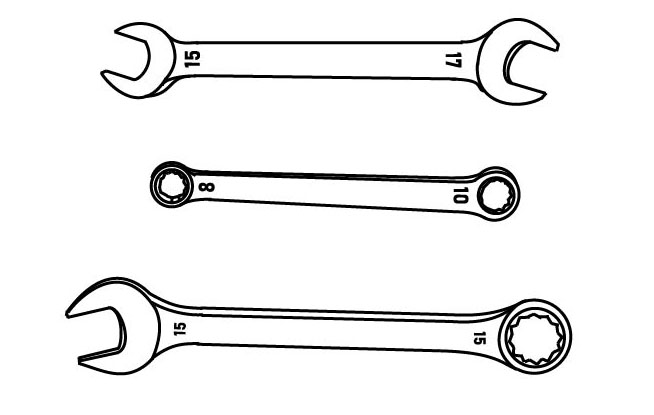
In much of the world, what Americans call wrenches are called spanners. In the U.S., the word “spanner” sounds a little exotic — or like something you drop into machinery — but it simply refers to fixed-size hand tools designed to grip nuts and bolts.
Open-end, box-end, and combination wrenches are the most common examples. They’re simple, durable, and incredibly effective when used correctly — and they form the backbone of almost every basic toolbox.
If adjustable wrenches are the multitools of the wrench world, spanners are the specialists.
Open-End Wrenches: Fast Access, Less Grip
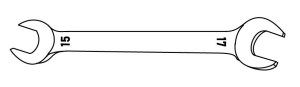
An open-end wrench has U-shaped jaws on one or both ends, designed to slide quickly onto a nut or bolt from the side. Because they feature two different open ends, the ends are usually two different sizes, doubling the tool’s usefulness.
Why DIYers use them
- Quick to position and remove
- Useful in tight spaces where you can’t lift the wrench straight off
- Great for spinning fasteners once they’re loosened
The tradeoff
Open-end wrenches only grip two sides of a fastener. That makes them more likely to slip if:
- The fastener is very tight
- The wrench isn’t seated fully
- The size isn’t exact
This is where rounded bolts and bad language are born.
Best use: light-to-moderate torque, quick access, follow-up turning after loosening with a box-end or socket.
Box-End Wrenches: Maximum Grip and Control
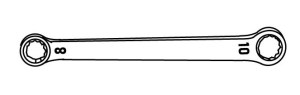
A box-end wrench completely surrounds the nut or bolt head, usually with a 6-point or 12-point opening. Like the open-end, they usually feature two different sizes, one on each end.
Why they’re so effective
- Grip all sides of the fastener
- Dramatically reduce slipping and rounding
- Allow higher torque with more control
6-point vs. 12-point
- 6-point: strongest grip, best for tight or rusty fasteners
- 12-point: easier to reposition in tight spaces, slightly less grip
Box-end wrenches are slower to position than open-end, but they’re the right choice when:
- The fastener is stubborn
- You care about not damaging it
- You only get one chance to loosen it
Best use: breaking loose tight fasteners and final tightening.
Combination Wrenches: The Best of Both Worlds
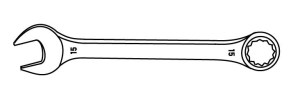
A combination wrench pairs an open-end on one side and a box-end of the same size on the other. These are the most popular spanners for a reason. Because the two ends are different, they are almost always the same size.
Why combination wrenches are so common
- One tool, two functions
- Open-end for speed
- Box-end for torque and precision
For most DIYers, a combination wrench set is the smartest starting point. They’re versatile, intuitive, and compact — and they teach good habits naturally.
Best use: general repairs, furniture assembly, automotive basics, and anything involving standard nuts and bolts.
Choosing Sizes: SAE vs. Metric (Yes, You Probably Need Both)
Most wrench sets come in:
- SAE (inch): common on older U.S. equipment and vehicles
- Metric (mm): standard on most modern tools, furniture, and vehicles
If you’re building a basic toolbox today, metric sees more action — but having both saves frustration later.
When to Use Spanners Instead of Adjustable or Socket Wrenches
Spanners shine when:
- You need precision and control
- Space allows full engagement on the fastener
- You want to avoid slippage entirely
They’re often preferable to adjustable wrenches and sometimes better than sockets in shallow or awkward spaces.
If you’re unsure which wrench style to reach for in a given situation, our broader guide walks through the decision process:
How to Choose the Right Wrench
When shopping for spanners:
- Look for forged steel construction
- Prefer clearly marked sizes
- Avoid ultra-cheap sets with sloppy tolerances
A modest-quality combination wrench set will outlast most DIY projects — and often the DIYer.
This highly-rated WORKPRO 32-piece Combination Wrench Set features both metric and SAE wrenches at an affordable price.
(As an Amazon affiliate, I earn on qualified purchases)
Bottom Line
Spanners — open-end, box-end, and combination wrenches — are simple tools that reward correct use. They don’t adjust, they don’t ratchet, and they don’t forgive sloppiness. In return, they deliver grip, control, and reliability.
They’re not flashy.
They’re just right.
DIY projects involve risk. Always follow manufacturer instructions and use appropriate safety precautions.
7048
 Skippity Whistles