

(Or, How I Learned to Choose the Right Staple Gun Without Regret, Swear Words, and Having to Return It)
You have decided to buy a staple gun.
Excellent. Civilization was built on three things: fasteners, leverage, and mild overconfidence.
But here’s the problem: there are more kinds of staple guns than there are kinds of soup at the grocery store, and choosing the wrong one can turn a pleasant Saturday project into a full-contact sport.
Let us avoid that.
Step 1: What Are You Actually Stapling?
Before we talk about tools, we must talk about materials. The right staple gun depends entirely on what you are fastening to what.
Light-Duty Projects
- Crafting
- Attaching fabric to foam
- Light upholstery
- Screen repair
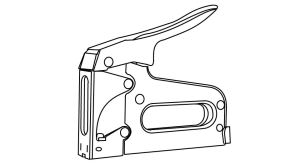
You want: Light-Duty Manual Staple Gun
These are inexpensive, easy to use, and perfectly fine for soft materials. They typically shoot:
- 1/4″ to 5/16″ staples
- Fine wire staples
If you are decorating a cork board, this is your friend.
If you are building a shed, it is not.
Medium-Duty Projects
- Attaching fabric to plywood
- Insulation installation
- Light woodworking
- House wrap
You want: Heavy-Duty Manual Staple Gun
These:
- Accept longer staples (up to 1/2″ or sometimes 9/16″)
- Provide more driving force
- Require more hand strength
This is the classic metal staple gun most people picture. If it feels like you’re squeezing a medieval device, you bought the right category.
Upholstery & Frequent Use
- Reupholstering chairs
- Large fabric projects
- Repetitive fastening
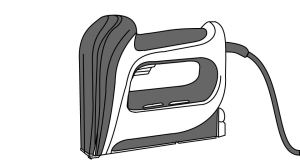
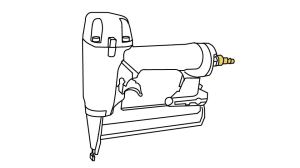
You want: Electric or Pneumatic Stapler
If you find yourself stapling hundreds of times in one afternoon, your forearm will send you a strongly worded letter if you stick with a manual stapler.
- Electric staple guns are convenient and plug-and-play.
- Pneumatic staplers (air-powered) are lighter and stronger, but require an air compressor.
For serious DIY or workshop use, pneumatic is king.
Step 2: Know Your Staple Type
This is where it’s remarkably easy to get confused.
Staple guns are often designed around specific staple series. The packaging might say:
- T50
- JT21
- Arrow-compatible
- 18-gauge narrow crown
This matters.
A staple gun that uses T50 staples will not happily accept JT21 staples. Buying the wrong staple type is the #1 reason people think their tool is broken.
It’s not uncommon to buy the wrong refill staples, and then have to buy a new staple gun to match those. It’s not very productive, but it’s not uncommon.
When choosing a staple gun on Amazon, always check:
✔ Compatible staple series
✔ Staple length range
✔ Gauge (if applicable)
Step 3: Manual vs Electric vs Pneumatic
Let’s compare clearly:
| Type | Best For | Pros | Cons |
|---|---|---|---|
| Manual | Occasional DIY | Inexpensive, portable | Hand fatigue |
| Electric | Medium projects | Easy trigger pull | Less power than air |
| Pneumatic | Frequent/heavy use | Powerful, lightweight | Requires compressor |
If you’re doing one project a year → Manual is fine.
If you’re doing ten projects a year → Consider electric.
If you’re building furniture → Go pneumatic.
Step 4: Comfort Matters More Than You Think
Look for:
- Ergonomic grip – when you squeeze the lever, you trigger a spring-mechanism that shoots the staple. Make sure the gun’s lever fits comfortably in your hand.
- Jam-clear mechanism – it’s not unusual for staples to get jammed under the spring-mechanism. Look for a stapler that has a built-in jam-clearing device. Digging out bent staples with needle-nose pliers is not a hobby you will enjoy.
- Easy-load magazine – most jams occur following a reload. They occur because the reload was difficult or confusing. Look for an easy-load magazine.
- Staple window (so you don’t run dry mid-project)
Step 5: Safety (Because Yes)
Staple guns are not toys. Even manual ones can embed a staple into hardwood — or your thumb.
Look for:
- Safety trigger mechanisms
- Contact safety (on pneumatic models)
- Clear operating instructions
- Always, always disconnect power or air before clearing jams.
- Always wear appropriate eye protection.
- You may face a huge temptation to shoot a staple at a target. If you do, go ahead, get it over with. Don’t shoot the staple at someone (what if it hit their eye?) or any living thing, or at something that will bounce the staple back at you (what if it hits your eye?). And, now that you’ve done that, never do it again. These are meant for driving staples into material, period.
Quick Buyer Checklist
Before clicking “Add to Cart,” ask:
- What materials am I fastening?
- How often will I use this?
- What staple size do I need?
- Do I already own an air compressor?
- Do I want to squeeze this 500 times today?
If you can answer those questions, you will choose wisely.
Recommended Types of Staple Guns (For Easy Amazon Shopping)
To keep things simple, most DIYers benefit from one of these:
- Heavy-duty manual staple gun (T50 compatible)
- Corded electric staple gun for upholstery
- 18-gauge pneumatic narrow crown stapler (for workshop projects)
(As an Amazon affiliate, I earn from qualifying purchases.)
Final Thoughts
The right staple gun is the one that:
- Drives the correct staple
- Matches your project
- Does not make you question your life choices halfway through
Choose for the job, not for the price alone.
Fasteners are small. Regret is large.
DIY projects involve risk. Always follow manufacturer instructions and use appropriate safety precautions.
7045
 Skippity Whistles