
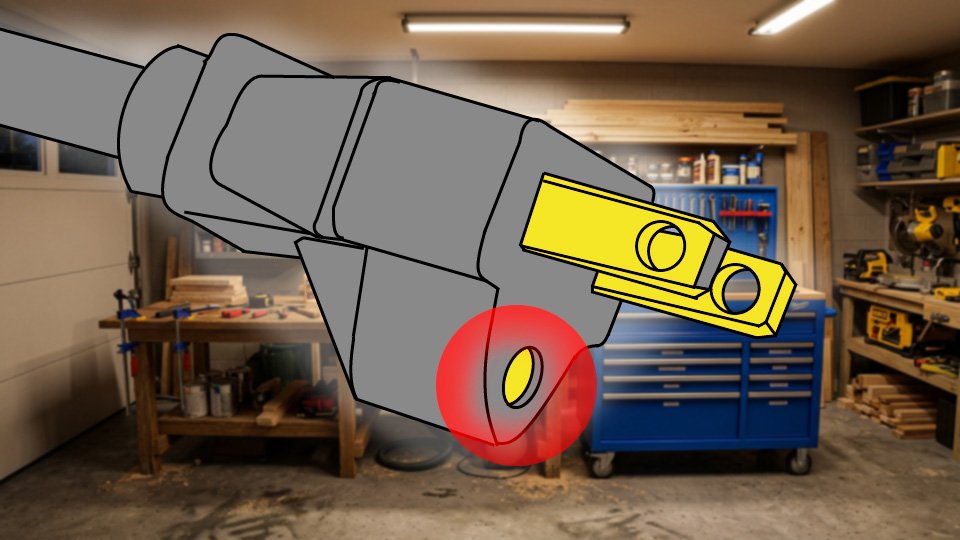
Ron Screwstrip has an extension cord in his garage that has been there since the previous owner. It is orange. It has a crack in the insulation near the plug end that he has been meaning to look at for about two years. The crack is not getting smaller.
Extension cords are one of those household items that live in a drawer or a pile until they’re needed, get used without inspection, and get put back the same way. Most of the time nothing happens. Occasionally something does, and “occasionally” is not a reassuring statistic when the thing that happens involves electricity and a fire.
Here’s how to tell when a cord is done, what the numbers on the label actually mean, and what to buy when the old one finally goes in the trash where it belongs.
🔍 The Seven Signs a Cord Needs to Go
Cracked, cut, or frayed insulation anywhere along the cord — especially near the plugs, where cords bend most often. The insulation is what stands between the live wire inside and everything around it. A crack is not a cosmetic issue. It’s a reason to stop using the cord today.
Exposed wire. If bare copper is visible anywhere, the cord is done. Full stop. Don’t tape it. Don’t wrap it in electrical tape and consider the problem solved. Electrical tape is not a repair; it’s a delay. Replace the cord.
Bent, corroded, or missing prongs on the plug. The prongs make the electrical connection. A bent prong makes a poor connection, which generates heat at the connection point. Heat at a connection point is how cords start fires.
The cord feels warm or hot during normal use. Extension cords should be at room temperature while in use. A cord that’s warm to the touch is carrying more current than it’s rated for, or has internal damage that’s increasing resistance. A hot cord is an urgent problem.
Sparking or buzzing when you plug something in. These are signs of a failing internal connection. Unplug everything, set the cord aside, and replace it.
A plug that fits loosely in the outlet or in the device. A loose connection generates heat. See above.
Age without inspection. Extension cords don’t last forever even without visible damage. If a cord has been in the garage for a decade without anyone looking closely at it, it has earned a close look. If it passes inspection, fine. If it doesn’t, now you know.
📊 What the Numbers on the Label Actually Mean
Extension cord labels have numbers on them that most people ignore entirely. The two that matter are the gauge and the amperage rating.
The gauge — usually written as something like 12/3 or 16/3 — describes the thickness of the wire inside the cord. This is counterintuitive: a lower gauge number means a thicker wire. A 12-gauge cord has thicker wire than a 16-gauge cord, which means it can carry more current over a longer distance without overheating.
For outdoor use and power tools — drills, saws, lawnmowers, anything with a motor — you want a 12-gauge cord. For indoor use with lamps, phone chargers, and small appliances, a 14 or 16-gauge cord is fine. Using a thin cord with a high-draw tool is how cords overheat, and overheating is how fires start.
The amperage rating tells you the maximum current the cord can safely carry. Most household circuits run on 15 amps. Your extension cord should be rated for at least as much as the device you’re plugging into it. If you’re running a circular saw that draws 12 amps through a cord rated for 10 amps, you’re asking for trouble.
The UL or ETL certification label on the cord means an independent testing organization has verified that the cord meets established safety standards. Buy cords with one of these certifications. It’s not a guarantee of immortality, but it means someone other than the manufacturer checked the cord’s safety claims.
🚫 The Things That Shorten a Cord’s Life Fast
Running a cord under a rug or carpet. Cords generate a small amount of heat in normal use. Under a rug, that heat has nowhere to go. Over time this degrades the insulation and can ignite the rug. Cords are not meant to be hidden — route them along baseboards if you need to manage them, but never under floor coverings.
Daisy-chaining — plugging one extension cord into another. Each cord adds resistance. More resistance means more heat. Two extension cords plugged together are carrying the load of the second cord through the first cord’s entire length, which means the first cord is working harder than it was designed to. If you need more length, buy one longer cord.
Coiling a cord tightly while it’s in use. A tightly coiled cord under load acts like a coil of wire in an electrical circuit, which is exactly what it is — and coils build up heat. Unroll the cord fully before use. Leaving it coiled is fine for storage; it’s not fine when the cord is carrying current.
Yanking a cord out of the outlet by the cord instead of the plug. This stresses the connection between the wire and the plug, which is where most cord failures begin. Pull the plug, not the cord. Every time.
🛒 Gear Worth Having
Iron Forge Cable 25ft Outdoor Extension Cord — 12/3 SJTW, 15 Amp, UL Certified — 12-gauge wire handles serious tool loads: circular saws, drills, lawnmowers, power washers. Stays flexible in cold weather so it doesn’t crack when you uncoil it on a winter morning. Lighted end confirms the cord is live. UL certified. Veteran-owned American business. This is the cord for the garage and the yard.
Belkin 12-Outlet Power Strip Surge Protector — 8ft Cord, 4,320 Joules — For the home office, entertainment center, or workshop bench where multiple devices need a single managed source. Surge protection at 4,320 joules guards against voltage spikes that can damage electronics. Rotating plug fits in tight wall outlet configurations. The right indoor solution when a single outlet isn’t enough.
Maximm Cable Flat Extension Cord — 6ft, 16 AWG, UL Listed — For furniture, behind appliances, and anywhere a standard round cord creates a bump under a rug or won’t fit behind a cabinet. The flat profile slides neatly along baseboards and behind furniture without creating a tripping hazard or a lump under flooring. 16-gauge for lamps and small appliances; not for high-draw tools.
As an Amazon affiliate, I earn from qualifying purchases. Thank you for supporting SkippityWhistles.
📖 Related Reads
Ron Screwstrip threw out the orange cord. He replaced it with a 12-gauge outdoor cord that lives on a reel in the garage and a surge-protected strip on the workbench. The crack near the plug is not his problem anymore. He feels significantly better about the whole situation, and slightly embarrassed it took two years.
SkippityWhistles is part of the John D Reinhart content family. Writer, illustrator, videographer, and accidental filmmaker — find the whole story at JohnDReinhart.com.
4004
©2026 John D Reinhartskippitywhistles.com/ – all rights reserved